Introduced by MALIK MERCHANT
November 2, 2026, marks the 149th birth anniversary of His Highness Aga Khan III, lovingly known to his Ismaili community as Mawlana Sultan Mahomed Shah. He became the 48th Hereditary Imam of the Ismaili Muslims in August 1885, at age seven. He passed away on July 11, 1957, making his 71-year Imamat the longest in Ismaili history.
In the 1920s, the well-known London Evening Standard published a series of articles titled “How to Live Long,” where various public figures shared insights about their lifestyles, diets, and health practices aimed at achieving a long and healthy life. His Highness contributed a two-column piece, the fifth in the series, which featured his signature and photograph. Like him, his successors — His Highness Prince Karim Aga Khan IV (who passed away on February 4, 2025) and His Highness Prince Rahim Aga Khan V, the 49th and 50th Imams, respectively — have emphasized the importance of physical activity and maintaining a healthy lifestyle.
As we remember our beloved 48th Imam on his birth anniversary, we present the following excerpts, adapted from “Aga Khan III: Selected Speeches and Writings of Sir Sultan Muhammad Shah, Volume I,” edited by K. K. Aziz. For the full article, in the Evening Standard, see pages 786-789 of the volume.
We also invite readers to download our exquisite 191-page PDF publication, Aga Khan III: Glimpses from His Life, featuring 28 articles covering his significant life.
_____________
How to Live Long by His Highness Aga Khan III
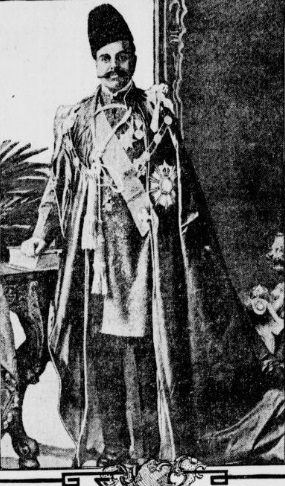
All my life I have been keenly interested in the kindred subjects of exercise and diet, and their influence on the general health and fitness of the human body. As a child, I did far too little exercise. I was brought up to ride well from the time I was about five years old, and rode regularly until I was about sixteen or seventeen. It was then I wanted to take a short walk of about 1.5 miles and found to my chagrin that at the end of it I was completely exhausted. And I had been in the habit of riding about 20 miles some three or four times a week. Riding had left me soft in all muscles with the exception of those actually exercised.
It was then I decided to improve my physique. I came in touch with the late Eugen Sandow, who gave me some excellent advice which I have never forgotten. Later I took up boxing. I know of no exercise so physically beneficial as a combination of the French and British boxing methods — the French for the digestive and internal muscles and the legs, and the British for the arms, back and shoulders.
Although I am now forty-nine, I never miss a day without exercising, preferably boxing or kicking. At one time I used to have a sparring partner sent over to my rooms at the Ritz from the National Sporting Club. In the summer months I often rise very early, put on a sweater, and go for a run through Green Park, up Constitution Hill, and back again before breakfast. If I am in France, I usually go to Aix-les-Bains, not for the waters, but to enjoy long walks in the mountains, which is a splendid exercise.
Never a day goes by but I spend at least fifteen to twenty minutes in some form of physical exercise. Even when I am in India or in Africa, where I have to work very hard — sometimes eighteen hours a day — I always make time for that necessary physical exertion which is so essential for bodily fitness.
For years I played golf and tennis, but I find that neither of these games is adequate; nor is hunting. The majority are only able to indulge these sports once or twice a week, which is contrary to the body’s requirements. The average English gentleman does practically nothing in the way of sport for five days a week, and then indulges himself over the week-end.
He is unquestionably wrong. He should, at least once a day, and oftener if he can, take some pleasurable and vigorous exercise. Unless he does so his whole body becomes ungainly and horrible, which is the most ungrateful way of returning thanks to “God Who made us in His own image,” for, although I do not believe that we are actually made in the image of God, I believe that physical beauty has a spiritual value.
Walking is a good exercise if it is not allowed to be merely a saunter through the streets. A good swinging pace of between four and five miles an hour is ideal. I do a good deal of walking, and usually cover about ten miles in two and a half hours. I think it is a very bad thing for one who is heavy to try to reduce his weight by any form of exercise or diet. Rather, he should try to get hard and remain big instead of being merely soft and large. Softness is the enemy, not size.
I have a very strong aversion from colours when exercising. Coloured socks, coloured trousers, or underclothes are, I think, unhealthy, and I am against the wearing of tweeds for the same reason. White cotton, white drill, white shoes seem cooler; flannels or serges or woollens that are porous are to be preferred most.
Too much sleep dulls the brain and also precludes taking full advantage of many of the beauties of nature. In my many crossings over to the Continent and world travels I usually try to journey by night so that I may enjoy the dawn as it breaks on the sea or on different landscapes. Unfortunately in summer-time it is not practical politics to be up before sunrise every morning, though in winter I always see the dawn, usually from some spot in the East or on the high seas, and sometimes on the Riviera.
Five or six hours of regular sleep and a ten-minute nap either before dinner or immediately after lunch or in a motorcar when being driven are quite enough for most of us. If one allows himself only that he is likely to sleep the whole time and not to lie awake with insomnia. It is the same as getting full value out of a twenty-minute walk which might have taken two hours.
In regard to diet, I believe that we eat too much, and for this reason I think we should all drop one or two meals a week, which is my own practice. That means that on three days a week I take only one solid meal. I think that is more natural and simpler, and much less boring than some of the elaborate regimes that have been worked out by others. On ordinary days I have fruit and coffee for breakfast, and later take a big lunch.
At tea-time I take tea only, and no solids. It is my custom at dinner to take a meal that is much smaller than my lunch. I have no fads and few special fancies. I accept what is put before me, and the better the food the more I enjoy it. What a person enjoys is, in my opinion, good for him.
Colour, which is to be avoided in clothing for exercise, is a stimulant in food. A beautiful apple or peach becomes tempting because of its colouring, and seems more enjoyable. Fruits are adequate for breakfast; I will not even admit a piece of bread to my table for this meal.
Date posted: November 1, 2026.
We invite our readers to download Aga Khan III: Glimpses from His Life, a 191-page PDF publication covering his extraordinary life.
______________
Please click SUBSCRIBE and enter your email address to receive update notifications from Barakah. Before you leave, remember that Barakah’s editor, Malik, is here to assist you. If you have any questions or feedback, please scroll down to leave a comment or send an email to mmerchant@barakah.com. Also, don’t miss the opportunity to explore the diverse and extensive content on Barakah’s Home Page or Table of Contents, with over 350 pieces dedicated to Mawlana Hazar Imam, members of his family and the Ismaili Imamat. And don’t forget to visit our sister websites, Simerg and Simergphotos. You can stay updated by following Malik on @Facebook, @X, @LinkedIn and @Instagram and by subscribing to Barakah.

