Prepared and compiled by MALIK MERCHANT
The measure of the [48th] Imam’s achievement can be gauged from the monumental progress of the Ismaili Community during the Imam’s regime. The metamorphosis of a moribund society from the depths of its degradation to its proud position in modern civilization during only about half a century is a saga of success with probably no parallel in history…the Imam was the architect of this modern miracle…The resurgence of the Ismaili Community, literally from rags to riches, is a fitting monument to the Imam’s indefatigable efforts — Esmail Thawerbhoy
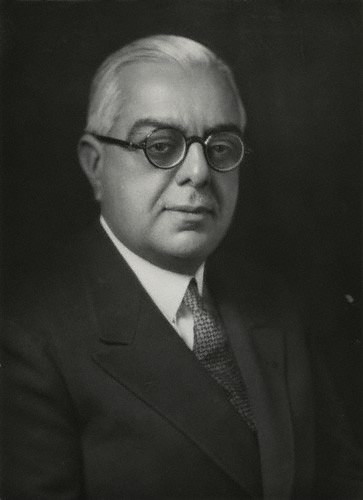
November 2, 2024, marks the 147th birth anniversary of the 48th Ismaili Imam, Mawlana Sultan Mahomed Shah, His Highness the Aga Khan III. At the remarkably young age of 7, he assumed the role of Imam in August 1885. His service to the Hereditary Institution of Imamat for 72 years, the longest in the 1400 years of Ismaili History, since the time of the first Shia Imam, Hazrat Ali, is a source of pride and inspiration. He passed away on July 11, 1957. He was succeeded by his grandson Mawlana Shah Karim Al Hussaini Hazar Imam, His Highness the Aga Khan IV, who made the following remarks during one of his early speeches after becoming the Imam:
“On 2nd November, 1877, my beloved grandfather was born here in Karachi. Through 72 years of Imamat, he guided his spiritual children to happiness and prosperity….Many, many memories come to our minds as we think of him. He achieved in his life, for our community, that which could only have been accomplished normally in a period of many generations. The tributes that the world has paid him bear honest testimony to his great life and work” — His Highness Prince Karim Aga Khan, 49th Ismaili Imam.
Each Imam presents to the world of his time that facet of the multi-faceted splendour the Ismailis call Imamat. All Ismaili philosophers have emphasized the principle of the Unity of Imamat under the superficial diversity exhibited by each Imam of the Time. It is in this sense that the Ismailis believe that Imam is the same irrespective of his own age or the time he lives in — Esmaili Thawerbhoy
As we present the 48th Imam’s brief biography, we want to draw our readers’ attention to the first systematic compilation of his speeches and writings in the first half of the 20th century. This work holds a significant place in history and we hope it will enlighten and inspire you. The two-set volume is available at literature counters in Ismaili Jamatkhanas worldwide. The description of the Imam’s work, adapted from the website of the Institute of Ismaili Studies, is as follows:
Aga Khan III: Selected Speeches and Writings of Sir Sultan Muhammad Shah

Aga Khan III (1877–1957) was the 48th Imam of the Shiʿi Ismaili Muslims. Through his knowledge of Eastern as well as Western cultures, he was uniquely placed to play a significant role in the international affairs of this time.
The long public career of Aga Khan III had many dimensions. He was a social reformer whose concerns included the alleviation of rural poverty and the uplift of women in society. An advocate of modern education, he supported male and female educational advancement in India and East Africa, and played a key role in the development of the Muslim University of Aligarh. He advocated a truly multicultural education blending the best of Western and Eastern literary classics. He was a champion of amity between nations and peoples and in India he supported the idea of Hindu-Muslim unity, reminding both that India was their common parent. On the international scene he strove for world peace, and in 1937 was elected president of the League of Nations.
This monumental work, covering the years from 1902 to 1955, represents the first systematic compilation of the speeches and writings of Aga Khan III in the first half of the 20th century. Among the topics covered are constitutional progress in India, education, rural development, Hindu-Muslim unity, Indians in Africa, the renaissance of Islamic culture, the importance of science and technology, the status of women, Islam in the modern age and Pan-Islamism. Professor K.K. Aziz has added a valuable introduction.
_______________
[The following is an adapted, edited and abbreviated version of Bashir Ladha’s extensive piece on His Highness the Aga Khan III, which was first published on the occasion of his birth centenary in November 1977 in a special commemorative issue of Ilm magazine, Ismailia Association, U.K. — Ed.]
By BASHIR FAZAL LADHA

BIRTH AND EARLY EDUCATION
His Highness the Aga Khan III, Hazrat Imam Sultan Mahomed Shah, was born on Friday, 2nd November1877, at “Honeymoon Lodge” in Karachi. His birth was an occasion of immense joy for the family, particularly his grandfather, Hazrat Imam Hassanali Shah, Aga Khan I, who named him “Sultan Mahomed.”
The young Aga Khan’s education was not limited to the confines of a public school, but was instead a rich and diverse experience within the walls of his home. The curriculum, carefully crafted by his tutors and his forward-thinking mother, Lady Ali Shah, spanned a multitude of subjects including Urdu, Persian, Arabic, English, French, Mathematics, Astronomy, Chemistry and Mechanics. His exceptional learning abilities, coupled with his innate curiosity, propelled him to make significant strides in Western literature and the study of the history of the ancient and modern worlds. He also achieved a high level of proficiency in philosophy and theology.
Recalling his course of studies, the Aga Khan wrote:
“I had already been grounded in Arabic and Persian literature and history, and first inspired thereto in childhood, to this day I take a special interest in historical studies connected with the early Caliphs. Under my English tutors, I gained an attachment, which also remains with me, to the writings of the more stirring and eloquent of the English historians and of the foremost novelists — particularly Gibbon, Thackeray and Dickens.”
YOUNG IMAM EXHIBITS ABLE LEADERSHIP AND WISDOM

When Mawlana Sultan Mahomed Shah succeeded his father Mawlana Aly Shah as the 48th Imam of Ismaili Muslims on 17 August 1885, he was only in his eighth year. Even at this tender age, he administered the affairs of his followers with a maturity of wisdom that was very surprising.
Long before he had reached the age of fifteen, Mawlana Sultan Mahomed Shah proved himself an able administrator of the affairs of his vast following. He visited the Jamats and resolved disputes with a legal acumen seldom found in those who are not lawyers. He worked incessantly for the benefit of his followers, and not being content to lead the Ismailis in religious matters, he strove hard for their moral and material welfare with the result that, in the course of only a few decades, the Ismailis earned a reputation of being a progressive and forward-looking community.
A WELL INFORMED PERSONALITY

While Mawlana Sultan Mahomed Shah had a wide range of reading, his understanding of people and things was not theoretical but practical. His judgments were not based on what he had read, but on what he had personally witnessed and heard. Lloyd George (Prime Minister of Great Britain during the early 1920s) described him as:
“He is one of the best informed men I have ever met. His general information is astonishing. He is extraordinarily well read and possesses an intimate knowledge of international affairs in all parts of the world. He is widely travelled and is always moving round the capitals of Europe, in all of which he has influential intimates. His means of securing information were remarkable. He seemed to have touched upon all branches of literature and to be well versed in science. Altogether a very extraordinary person.”
A TRUE LEADER OF ISLAM; ALAS MUSLIMS DID NOT TAKE ADEQUATE HEED

Imam Sultan Mahomed Shah never tolerated anything detrimental to Islam, and therefore, he would not hesitate in the least to make his views known publicly. Islam was always foremost in his heart, and he would always appeal to the Muslims in a beseeching and affectionate manner:
“My fellow-Muslims, I implore you, I beg of you, to work for the advancement of the whole of Islam, but never forget our intellectual debt to our Holy Prophet.”
Generally, tiny heed was paid by the Muslims to Imam Sultan Mahomed Shah’s guidance and therefore, lamenting over this attitude, Qayyum A. Malick wrote in his book Guide, Philosopher and Friend of the World of Islam:
“Had world Muslims kept pace with the progressive views of Prince Aga Khan and had they showed some encouraging consciousness and appreciation of his leadership, the seeds of moral and material uplift sown by him almost half a century ago would have been bearing abundant fruit today. If the Muslims had thrown up a small body of trustworthy men, capable of working in unison according to a set program of general advancement under the leadership of His Royal Highness there should have been no occasion to bemoan our backwardness now.”
For the Ismailis, the period of his Imamat ushered in a complete transformation. A community hitherto unknown in any field progressed rapidly to great heights within a matter of a few decades. What happened to theIsmaili Community during his Imamat is nothing less than a miracle.
In his role as the 48th Imam, Mawlana Sultan Mahomed Shah set about to advance and consolidate the position of Ismailis at all levels. Under his guidance, a great spirit of social service, philanthropy and love for one another became a notable community feature, fostering a strong sense of unity and cohesion. This attitude of mutual help among themselves and the smooth working of the welfare state created by the Imam won the unmistakable admiration of the leaders of other communities. Mahatma Gandhi once observed to Mawlana Sultan Mahomed Shah:
“I have been striving for so many years for the attainment of Swaraj (independence), but you have already brought the blessings of Swaraj to your people.”
While the Imam created numerous institutions to advance and consolidate education, health, and a general state of happiness and well-being among his followers, he upheld a high mark of abiding values. True to the traditional and historically acknowledged trait of his Holy House, he considered the spiritual goal the prime and foremost essential of human life.
RELIGIOUS GUIDANCE TO HIS FOLLOWERS COVERED IMAMAT, PRAYERS, UNITY AND ATTRIBUTES OF A TRUE MU’MIN

Mawlana Sultan Mahomed Shah’s religious advice to his followers was extensive and elaborate. He touched on many themes during his seventy-two years of Imamat, including theology, spirituality, Imamat and ethics. Some of his messages to the Ismailis were:
“Qur’an was basic. Pir Sadardin [an Ismaili missionary] had come to their ancestors to lead them to the true faith. It was essential to have strong faith in the descendants of Prophet Muhammad and Hazrat Ali. If the faithful had love for the descendants of Ali, they had nothing to fear, and therein lay the whole mystery of faith. True faith was founded upon love and reason.”
“The faithful should come and pray in the Jamatkhana. Prayers must be said with understanding. Pray for others as this brings one nearer to God. By prayer one rises to a higher plane. If the faithful was far from Jamatkhana he should say his prayers wherever he was. Even if the body was unclean, prayers could not be missed. The soul was pure. Unity in the Jamat was important. All his murids were spiritual children of their Imam, who was their spiritual father and mother.”
“Harm done to another would cause immense pain to the Imam. Help each other. Serve the jamats. Service to jamats was service to their Imam. True mu’min (believer) was always happy and satisfied. True mu’min rejoiced at difficulties, for such sorrows and difficulties wiped away sins. True mu’min never feared death.
“That a true mu’min would always thirst for Imam’s Noorani Didar. True mu’min, after death, would earn salvation in Noor-e-Imamat.”
THE JUBILEES
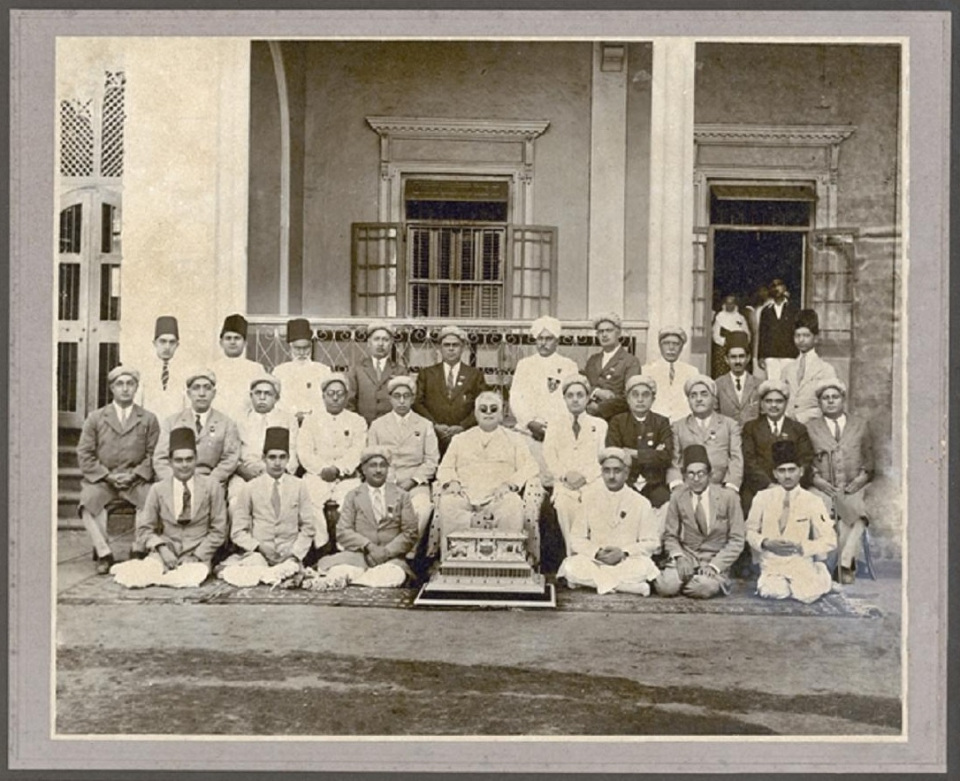
During his long reign, the Ismailis celebrated his Golden (1936), Diamond (1946) and Platinum Jubilees (1954-56) as a symbolic affirmation of the spiritual ties that linked them with their beloved Imam. These Jubilees were not just ceremonial events but significant milestones that resulted in profound development for the Ismaili community. The greatest impact resulted from the proceeds that Mawlana Sultan Mahomed Shah gave back to the community from the Jubilee ceremonies of weighing him in gold, diamond and platinum. In the Imam’s words, numerous institutions for social and economic development were established “for the relief of humanity.”
PASSING AWAY AND SUCCESSION

Forty minutes past midday on 11 July 1957, Mawlana Sultan Mahomed Shah, His Highness the Aga Khan III, passed away peacefully at his villa in Versoix, Switzerland, at the age of eighty, leaving behind him a memorable history of his glorious and eventful life. His reign of seventy-two years of Imamat was the longest in Ismaili history, a testament to his enduring legacy.
The mantle of Imamat was transferred by Nass in the loving care of Mowlana Shah Karim Al Hussaini Hazar Imam, His Highness the Aga Khan IV, by the following will:
“Ever since the time of my first ancestor Ali, the First Imam, that is to say over a period of thirteen hundred years it has always been the tradition of our family that each Imam chooses his successor at his absolute and unfettered discretion from amongst any of his descendants whether they be sons or remoter male issue.
“….I appoint my grandson Karim, the son of my son Aly Salomone Khan to succeed to the title of Aga Khan and to be the Imam and Pir of all my Shia Ismailian followers.”
The passing of Mawlana Sultan Mahomed Shah united Ismailis worldwide in a profound sense of sorrow and loss. Yet, in this shared grief, they found strength and unity, knowing that the loving care and guidance of Noor-e-Ilahi would continue in Noor Mowlana Shah Karim Al Hussaini, our beloved 49th Imam, who is now in his 68th year of Imamat.

Upon succeeding, Mawlana Shah Karim Hazar Imam gave the following assurance:
“My grandfather dedicated his life to the Imamat and Islam, both of which came first, and above all other considerations. While I was prepared that one day I might be designated the Aga Khan I did not expect it so soon. I follow a great man in a great responsibility and he could have given me no more appreciated honour than to bequeath me this spiritual leadership. My life, as his, will be dedicated to the service of my followers.”
Date posted: October 31, 2024.
___________________

About the author: A graduate of the Institute of Ismaili Studie’s first International Waezeen and Teachers Training Programme, Bashir Fazal Ladha has been with the Ismaili Tariqah and Religious Education Board (ITREB) for the UK since 1983. There, he has contributed to the religious education of the Jamat in numerous capacities — as waezeen, lecturer, and curriculum developer. He has shared his knowledge in the literary sector through multiple articles in Ismaili literary magazines worldwide, including UK ITREB’s defunct flagship magazine, Ilm. Alwaez Ladha’s future works on Ismaili history, and Ginanic literature are eagerly anticipated. His diverse interests, from reading and watching documentaries to listening to world music, reflect his multifaceted personality and keep him engaged beyond his professional commitments.
____________________
FEEDBACK
Barakah welcomes your feedback. Please scroll down for the COMMENT box. Your letter may be edited for length and brevity and is subject to moderation.
REVIEW BARAKAH’S TABLE OF CONTENTS AND VISIT ITS SISTER WEBSITES
Before departing this website, we encourage you to visit Barakah’s Table of Contents for links to more than 325 pieces dedicated to Mawlana Hazar Imam, members of his family and the Ismaili Imamat. Also, visit our two sister websites, Simerg and Simergphotos. Barakah’s editor may be reached at mmerchant@barakah.com. To stay connected and be part of the Barakah community, please follow Malik @Facebook and @X (formerly known as Twitter).
 Barakah
A very well curated compendium of the glorious journey, our beloved 48th Imam, charted for our Community.
Thank you!
knjm
LikeLike