Introduced, compiled and prepared by MALIK MERCHANT
His Highness Prince Rahim Aga Khan, respectfully addressed by his Ismaili followers as Mawlana Hazar Imam (Our Lord, the Present or Living Imam), succeeded his father, the late His Highness Prince Karim Aga Khan, as the 50th Hereditary Imam of the Shia Imami Ismaili Muslims on February 4, 2025.
As our second part, ’54 Years in Pictures,’ will show, he was actively engaged in the work of the Imamat for years before being named the Imam, often delivering speeches and remarks, sometimes on behalf of his father.
Story continues below
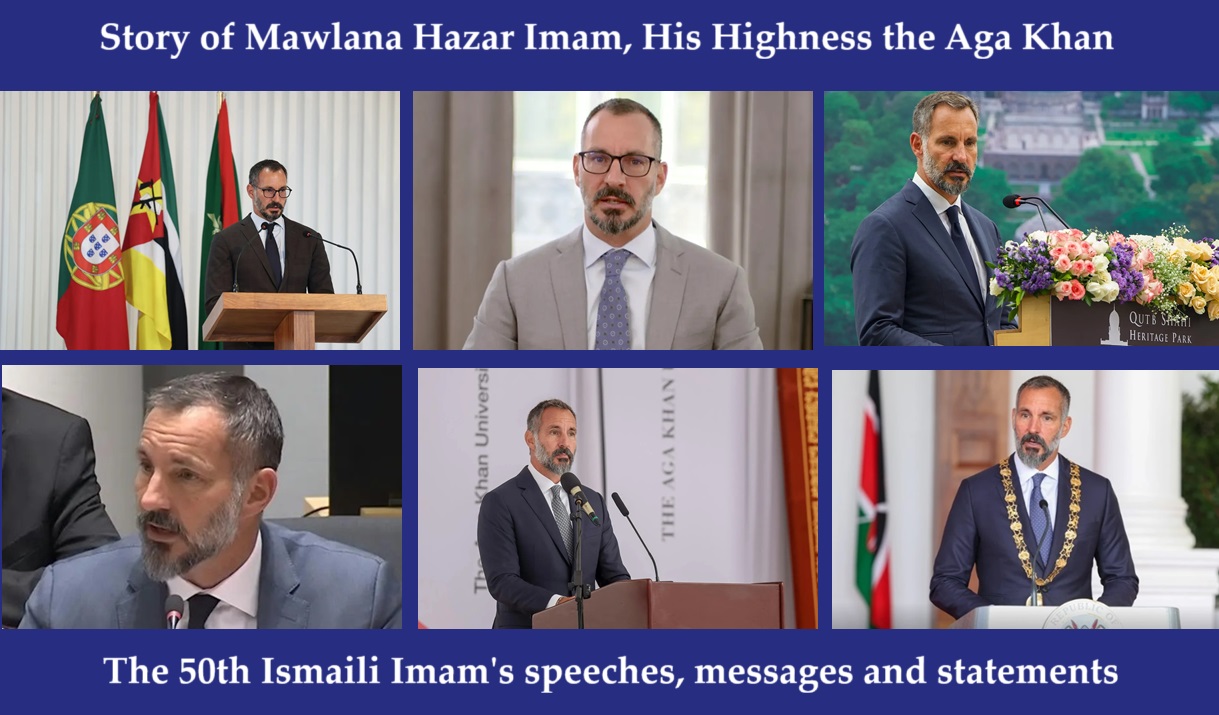
As Ismailis worldwide come together on October 12, 2025, to celebrate his 54th birthday — his first as their 50th Imam — we have gathered, as best as possible, his speeches, remarks, messages, and statements over the years that offer his insights into a diverse range of topics. These include faith and culture, the importance of education and volunteerism in the Ismaili community, his concern and love for his Ismaili followers, the climate crisis, the environment and the post-war recovery challenges in Afghanistan and Syria. The speech collection offers a deep understanding of Prince Rahim’s thoughts and teachings, stimulating our intellect and broadening our perspectives.
We have organized the speeches into two sections: those made after Prince Rahim became the 50th Imam (February 4, 2025, to the present), and those he delivered before assuming the Imamat, including those he delivered on behalf of his late father, Mawlana Shah Karim. They are presented in chronological order. We invite our readers to visit the AKDN Resources and Media Page for speeches made over the past several decades by both the 49th and 50th Ismaili Imams, and others, including members of the Imams’ family.
Anchor links to speeches and messages of His Highness the Aga Khan
Section 1: Speeches made from February 4, 2025, to Current
- February 18, 2025: A reflection of the two weeks since the passing of His Late Highness Aga Khan IV
- March 17, 2025:Statement at Conference on Syria in Brussels
- March 21, 2025: Nawruz message
- April 22, 2025: Message of condolence on the passing of Pope Francis
- May 4, 2025: Conferring Shafik Sachedina with Diwan Title
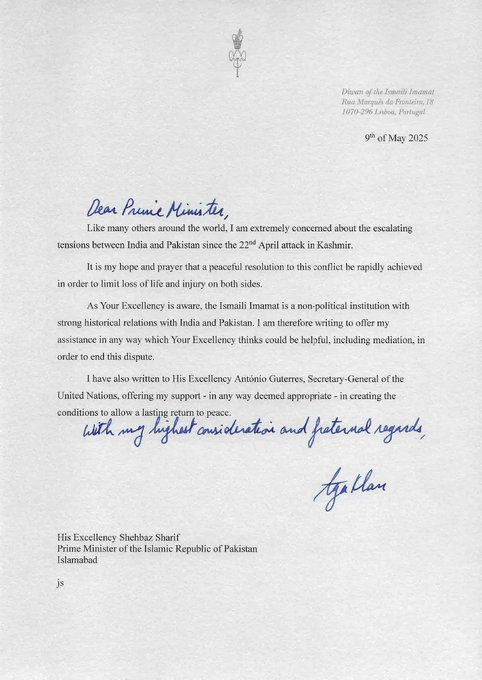
- May 9, 2025: Letter to Pakistan Prime Minister for Pakistan-India peace
- June 3, 2025: RAIC’s Fellowship induction of His Late Highness Aga Khan IV
- June 21, 2025: Message to Jamat in Iran
- June 21, 2025: Message to graduating class, University of Central Asia
- July 20, 2025: Message to the Global Encounter Festival, Dubai
- August 25, 2025: Support for flood hit Gilgit-Baltistan
- August 26, 2025: Remarks at State House Nairobi
- September 11, 2025: Commencement ceremony AKUH Kampala
- September 15, 2025: Aga Khan Award for Architecture, Bishkek, Kyrgyzstan
Section 2: Speeches made before February 4, 2025
- September 2007: Graduation ceremony, Institute of Ismaili Studies, London
- March 23, 2011: Inauguration of new head office of the Kyrgyz Investment and Credit Bank
- July 23, 2016: Remarks at the Ismaili Games in Dubai, UAE
- September 6, 2016: Remarks at the World Nomad Games, Kyrgyzstan
- November 23, 2016: Remarks by Prince Rahim at the Institute of Ismaili Studies, 40th anniversary
- 2020: Remarks during the launch of Earthshot
- March 19, 2022: Inauguration Aga Khan Academy Maputo
- March 31, 2022: Virtual Afghanistan Conference
- September 29, 2022: Signing of agreement with the province of British Columbia
- December 9, 2022: Kusi Ideas Festival – Climate issues, Nairobi
- January 18, 2023: IIS reception honouring Dr. Farhad Daftary, London
- February 13, 2023: World Government Summit, Dubai
- July 28, 2024: Qutb Shah completion ceremony, Hyderabad, India
- July 29, 2024: Opening of Humayun World Heritage Site Museum, New Delhi
Section 1: His Highness the Aga Khan’s speeches after becoming the 50th Imam
February 18, 2025: Message from hIS hIGHNESS THE aGA kHAN — A Reflection on the two weeks since the passing of His Late Father
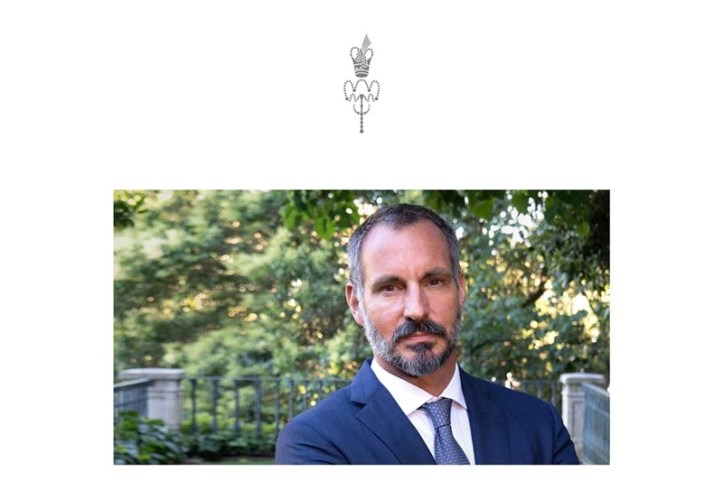
The past two weeks have been deeply emotional for the Ismaili community, and for all those around the world who had known my father or been touched by his work. I am awed by the outpourings of affection and respect for my father and the impact he made during his lifetime. His is indeed an immense legacy for us all to carry on.
On behalf of my family and me, I would like to express our deepest gratitude and admiration for the outstanding way in which our community immediately and seamlessly arranged the events that took place in Lisbon and Aswan. Beyond the flawless execution of the events themselves, millions of people in over 70 countries were able to participate through video streaming, images, and narration on The Ismaili digital channels.
Organising this involved a small number of our staff, and a huge number of volunteers working around the clock, with a clear unifying goal of holding a graceful series of events made widely accessible to the community wherever physically possible. This was done with sensitivity and care for all those participating.
My uncle, siblings, our children, and I see and appreciate all those who were involved – not just the leaders who were dealing directly with my family and me, but every single person who contributed, wherever they are.
Our tradition of volunteer service and its effectiveness is a source of enormous strength for our community, and I feel fortunate to be able to call on this for the benefit of my Jamat.
Well done to all involved, and especially to the handful of senior leaders who worked day and night to orchestrate all of this, and who provided tremendous support to my family and stable leadership to the community at this critical and difficult time. Knowing that we can rely on each other at a time like this is a source of the greatest comfort and reassurance.
My sincerest thanks again to all those involved in making the events of the last two weeks fitting, simple, and beautiful.
Aga Khan
______________________
March 17, 2025: Statement by His Highness the Aga Khan at Brussels IX: Standing with Syria — vIDEO AND TRANSCRIPT
VIDEO
~~~~~~~~
TRANSCRIPT
(Read at source HERE)

Bismillah-ir-Rahman-ir-Rahim
Excellencies,
Ladies and gentlemen,
I thank the European Commission for inviting me to this Conference. It is the first under a new Syrian government, and therefore guided by a spirit of possibility to revive the country and to reset its international relationships.
The Shia Ismaili Muslim community, of which I am the Imam, has been established in Syria for more than 1,000 years.
The Ismaili Imamat and the Aga Khan Development Network renew today the pledge of our ongoing and permanent support for the Syrian people, and our determination to help foster peace, hope, and development for a better future.
We commit today to make available a minimum of €100 million over the next two years toward Syria’s recovery.
With our partners, we intend to scale up humanitarian efforts; to invest in renewable energy and other vital areas of the economy; to expand the provision of health care and education; to address food insecurity; and to restore and preserve Syria’s rich cultural assets.
This work will require critical enabling conditions, foremost of which is an end to violence, and a commitment to peace by all parties.
It is our dearest hope and expectation that Syria’s new government will uphold its promise of enlightened, pluralistic, and inclusive government for all Syrians, irrespective of gender, faith, or background.
Now is the time to address a massive humanitarian crisis and the economic despair affecting the country. It is a time to release vital transitional assistance at scale, because the Syrian people need support.
We have an opportunity and an obligation now to foster hope, stability, and prosperity in Syria — for all Syrians.
Thank you.
______________________
March 21, 2025: Nawruz Message from His Highness the Aga Khan
“My family joins me in wishing Nawruz Mubarak to the Ismaili community and all those around the world who celebrate Nawruz. May this day bring new beginnings, good health, happiness, prosperity, and, above all, peace. Aga Khan.”
______________________
April 22, 2025: His Highness the Aga Khan’s Message of Condolence on the passing of Pope Francis
(Read at source HERE)
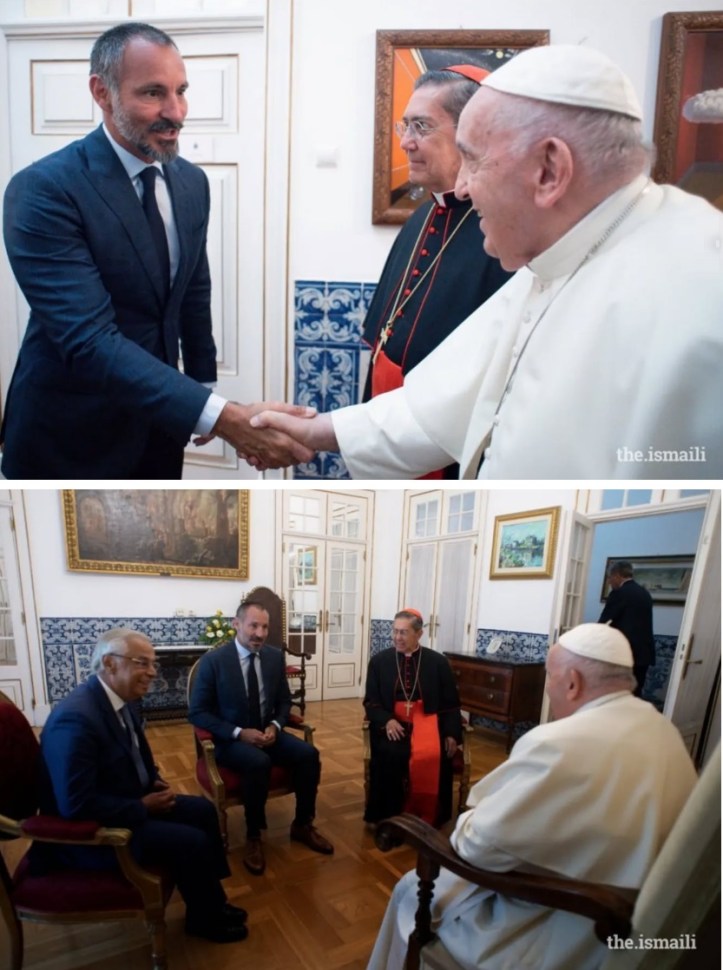
“My family and the global Ismaili Muslim Community join me in conveying our heartfelt condolences on the passing of His Holiness Pope Francis.
“I recall with great warmth my meetings with His Holiness and our discussions on humanity’s shared principles and values, the importance of embracing pluralism, and the urgent need to offer hope and opportunities to the less fortunate.
“His Holiness Pope Francis will be remembered for his courageous stance in defending the values of compassion and service to others. He leaves an important and inspiring legacy, which his words and actions will keep alive in the years to come.
“My prayers accompany Catholic communities worldwide at this sad time.”
Aga Khan
____________________
May 4, 2025: Message from His Highness the Aga Khan on bestowing Ismaili leader Shafik Sachedina with the title of Diwan
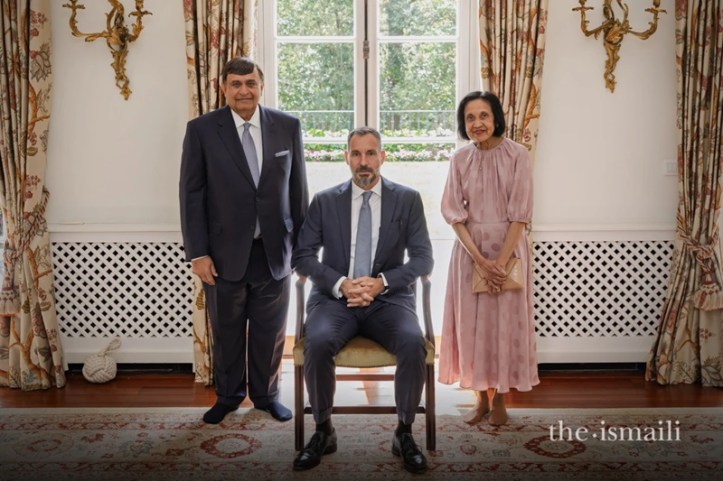
Mawlana Hazar Imam conferred the title of Diwan on Shafik Sachedina on May 4, 2025. The following are extracts from the Talika (written Holy Message) read out in Ismaili Jamatkhanas worldwide, in which Mawlana Hazar Imam explains the significance of the honour:
“The award of the title of Diwan in our Tariqah is one of the highest forms of recognition by which the Imam-of-the-Time acknowledges the services of a murid. Over the past decades, Diwan Shafik has worked closely with the Imam-of-the-Time on some of the most significant and important issues affecting the Jamat’s well-being. The Imam-of-the-Time and the Jamat have benefited from his generosity of time and effort, which he has given selflessly and with wisdom.
“I take this occasion to send to all the volunteers — who give unconditionally of their time, wisdom and resources — my warmest and most affectionate loving blessings for their services to the Jamat and the Imam-of-the-Time.”
______________________
May 9, 2025: His Highness the Aga Khan writes to Pakistan Prime Minister for Pakistan-India Peace
_____________________
June 3, 2025: mESSAGE ON BEHALF OF His hIGHNESS THE aGA kHAN AS His Late Highness Aga Khan IV IS inducted as an Honorary Fellow of the RAIC College
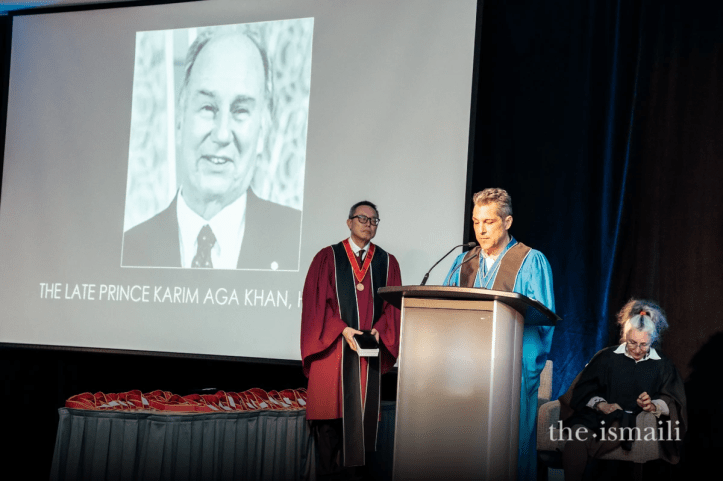
Following a press release dated March 7, 2025, the Royal Architectural Institute of Canada (RAIC) announced the names of five Honorary Fellows, including Mawlana Shah Karim, His Late Highness Aga Khan IV, who would be inducted into the RAIC College at a special ceremony in Montreal. The Fellowship was accepted in Montreal on Tuesday, June 3, 2025, by Dr Mahmoud Eboo, Representative of the Delegation of the Ismaili Imamat to Canada. Speaking at the event, Eboo said: “On behalf of His Highness Prince Rahim Aga Khan, his family and the Ismaili Muslim Community, I wish to thank the RAIC for the great honour of conferring this Fellowship on His Late Highness Prince Karim Aga Khan, in recognition of his lasting contributions to society and the built environment.”
______________________
June 21, 2025: Message from His Highness the Aga Khan to his Ismaili community in Iran
(Read message at source HERE IN FARSI and HERE IN ENGLISH).
The Ismaili, the official website of the Ismaili community, shared the following important message dated June 21, 2025. NOTE: The content within square brackets is ours to provide clarification:
“The Jamat [the Ismaili community] is informed that Mawlana Hazar Imam is closely following the current conflict in the Middle East, and sent yesterday, 20th June 2025, a Talika [a holy written message] to the Jamat of Iran.
“Mawlana Hazar Imam requested the Jamat to remain calm and to follow the directions of the Council and institutions, which are providing support and assistance to protect the Jamat’s well-being.
“He has conveyed prayers for an end to the current conflict, a return to peace and tranquility, and for long term stability in the region.
“Mawlana Hazar Imam conveyed his blessings for the Jamat’s mushkil-asan [protection from difficulties], safety and security, and stated that he will send further guidance as required.”
____________________
jUNE 21, 2025: Message from UCA Chancellor His Highness Prince Rahim Aga Khan V to UCA’s 2025 graduating class
(Read at source HERE)
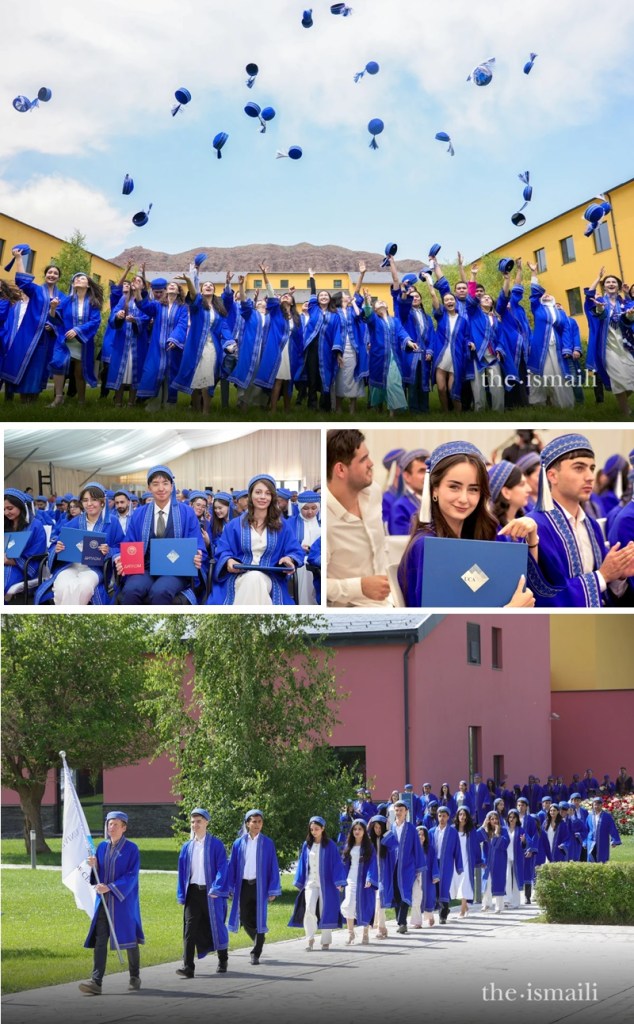
The following message was delivered by Dr Shamsh Kassim-Lakha, Chair of the UCA Board of Trustees, on behalf of His Highness the Aga Khan.
Honourable Ministers,
Honourable Governors,
Chair and Members of the Board of Trustees,
Rector, Faculty and staff of the University,
Parents, partners and friends,
And most importantly, dear graduates of the Class of 2025:
I am truly delighted to be addressing you and your families on this special day, and to share a few words as we mark this important milestone together. I understand that celebrations are taking place at both our Khorog and Naryn campuses, and I am sorry not to be with you in person.
Let me begin by warmly congratulating the graduates on this day, which marks the culmination of five years of hard work by you and your faculty, and the sacrifices of your families. You will leave today with your degree certificate in hand — a testament to your achievement — and carry with you the knowledge gained during your time at UCA for the rest of your lives.
Today’s ceremony is not only a celebration of your achievements, but also an opportunity for us to mark the 25th anniversary of the signing of the International Treaty that established UCA as a regional university through the extraordinary partnership between the founding states of Kazakhstan, Kyrgyzstan and Tajikistan, and the Ismaili Imamat. Together with our partners and many stakeholders, we have achieved a great deal over these 25 years — and I am excited about the successes the next quarter of a century will bring.
This is my first address to you as Chancellor of the University, and I wish to begin by acknowledging my late father’s vision in conceptualising, founding and implementing this extraordinary and pioneering project. If he were here with us today, he would be proud and delighted to witness the achievement of the graduating class.
In the work of UCA, and across the broader endeavours of the Aga Khan Development Network, the Ismaili Imamat remains committed to improving the lives of the people of Central Asia – working in close partnership with governments and other valued collaborators through our shared efforts and projects. Access to high-quality education is a fundamental pillar of our approach to development and has the potential to bring about transformational and lasting impact.
We are living through a period of profound transformation and change, and the pace of technological advancement is accelerating. The field of education is undergoing the biggest change since the printing press, and UCA will have a duty to be at the forefront of this change. We are also witnessing the dramatic effects of climate change on our lives, which is particularly relevant in the mountain regions in which UCA operates. Global economic trends are also evolving, with significant shifts in trade patterns amidst a volatile geopolitical backdrop, and re-emerging models of governance.
In this context, I trust that the graduating class is well placed to navigate the challenges ahead. The majors you have studied are of particular relevance – whether it is Economics, Computer Science, Communications and Media, or Earth and Environmental Sciences. More importantly, our programme will have given you broad exposure to many disciplines and developed your ability to learn and to apply critical thinking. You are also fluent in your national languages and in English, the universal language of business and the internet.
The litmus test of the value of a university is how its graduates fare in the future — what they make of their education. I have every confidence that this graduating class will go on to be great contributors to society, and my best wishes and prayers are with you for your success and happiness.
Let me conclude by expressing my deepest gratitude to all who have made this journey possible over the past 25 years: the founding states, the faculty and staff, the Board of Trustees, our donors and volunteers — and importantly, the communities who have welcomed this University into their midst. The road ahead will bring new challenges, but also new promise. Let us walk it together — with purpose, in partnership and with enduring hope.
Thank you.
______________________
July 20, 2025: HIS HIGHNESS THE AGA KHAN’S MESSAGE FOR THE LAUNCH OF 2025 GLOBAL ENCOUNTERS – Transcript and video
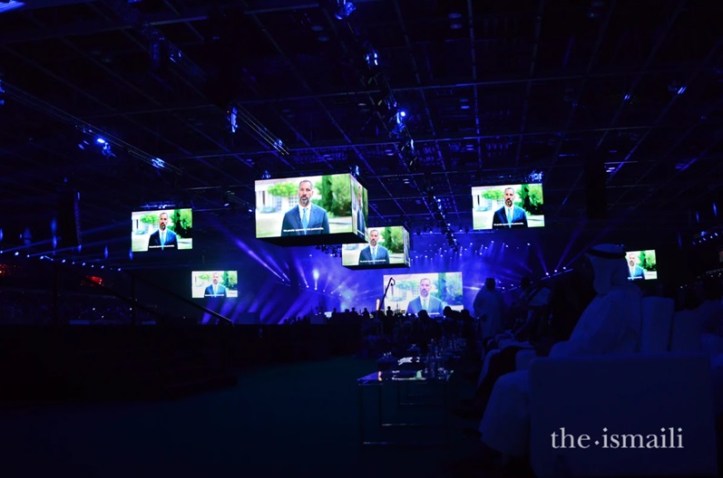
“Bismi’l-lahi’r-rahmani’r-rahim.
I would like to begin by expressing my heartfelt thanks to His Highness Sheikh Nahayan Mabarak Al Nahayan, Minister of Tolerance and Coexistence, and to His Highness Sheikh Mansoor bin Mohammed bin Rashid Al Maktoum, Chairman of the Dubai Sports Council and President of the UAE National Olympic Committee; to the city of Dubai; and to the government of the United Arab Emirates for the warm welcome they have extended to our Jamat.
“That His Highness Sheikh Nahayan and His Highness Sheikh Mansoor were also part of our celebrations during the Jubilee Games in 2016 highlights the continuity of our relationship and friendship with the UAE. We greatly appreciate this partnership, which is based on shared values and objectives.
“I truly wish I could be there to enjoy the Festival with you all in person, and I am grateful to my uncle, Prince Amyn, and to my brother, Prince Aly Muhammad, for being present on my behalf at the Opening Ceremony, and to my brother, Prince Hussain, who will join you later this week. I am conscious that mine is not the only absence from the Festival. I want to say that we are thinking very much of all of you who can not be here, for whatever reason, and who Insha’Allah, are joining us remotely with your families and Jamats, wherever possible. Of course, I want every gathering of our Jamat to be as inclusive as possible.
“Being with each other in person is fundamental to the health of our community. Even if sometimes difficult or costly, events like this give us a space to celebrate our diversity, to share our different experiences, and to make new connections and friends. But Global Encounters is more than just a gathering, it is also an amazing showcase of talent. This year promises to be another incredible spectacle — we are going to get a chance to see some of the greatest artists and athletes in our community. As the lineup shows, we can be deeply proud of the talent within our Jamat. We are good at celebrating our business, government, and thought leaders, but perhaps we are not always as quick to celebrate our athletes and artists, even though we have plenty of bright stars.
“Think of Rafiq Bhatia, recently Oscar-nominated for his film score work, or mountaineers like Sirbaz Khan and Samina Baig, both of whom have achieved world firsts in their field. It is only right that we celebrate these people and their accomplishments. To fulfil our potential as creatives or athletes is to realise a blessing. Sport and the arts are not only beautiful, they have a unique power to build bridges. Strangers who might not speak each other’s language can still come together to enjoy the same game of cricket or football and feel exactly the same passions. The poetry of great basketball, or volleyball, or wrestling is identical, whatever land you are from. And people who have different perspectives on almost everything can still fall under the same spell when they hear great music or see a beautiful piece of art. This is why many people have called art “the universal language.” And this is what Nelson Mandela meant when he said that sport “has the power to unite people in a way that little else does.”
“So, as you compete, do so with ambition, with integrity, humility and compassion, but most importantly, do so in the knowledge that you are sisters and brothers — members of One Jamat that has remained united over centuries. Let us cherish this unity, which has brought us so far and seen us through every challenge with courage and conviction.
“Finally, I would like to say a few more heartfelt thanks: to the thousands of volunteers who have sacrificed their time and efforts to bring this event to life; to the many donors whose generosity has enabled so many to participate regardless of means, and to the Council and Jamat of the UAE for hosting our global Jamat.
“To the parents, families, and communities who have supported our athletes, our artists, our performers, and musicians, here and at home, I convey my warmest Mubarak.
“I pray that each of you experiences the blessing of joy and happiness as you come together to celebrate art, culture, sport, and human potential, and that you leave with deeper understanding, hope and confidence in yourselves, in each other, and in our Jamat.
“Now I wish you all a wonderful Festival and all the very best.”
~~~~~~~~
VIDEO: HIS HIGHNESS THE AGA KHAN’S MESSAGE FOR THE LAUNCH OF 2025 GLOBAL ENCOUNTERS
______________________
August 25, 2025: His Highness the Aga Khan assures support to flood-hit Gilgit Baltistan in letter to Chief Minister
The following report in the Pakistan daily, Dawn, includes a message from His Highness the Aga Khan (read report at source HERE):
In a letter presented to the Gilgit-Baltistan chief minister by the Gilgit Shia Imami Ismaili Council president, His Highness the Aga Khan, extended “heartfelt sympathy for the devastating losses suffered by the people of Gilgit-Baltistan as a result of the recent flash floods and related disasters”.
“I am in close contact with our Council and the agencies of the AKDN in Pakistan, and I continue to monitor the situation as more such events are witnessed each day,” the letter said, adding that he was particularly sad to hear about the deaths of the volunteers who were working to restore the water-supply infrastructure near Gilgit.
“Thank you for your letter of 24th July seeking assistance in the recovery and restoration phase,” he said in the letter.
“From the time of my great-grandfather, the Ismaili Imamat has sought to play an integral role in the development and progress of the GB people. This region remains close to my heart…,” the letter said.
______________________
August 26, 2025: Remarks by His Highness the Aga Khan at State House, Nairobi, Kenya
(Read at source HERE)
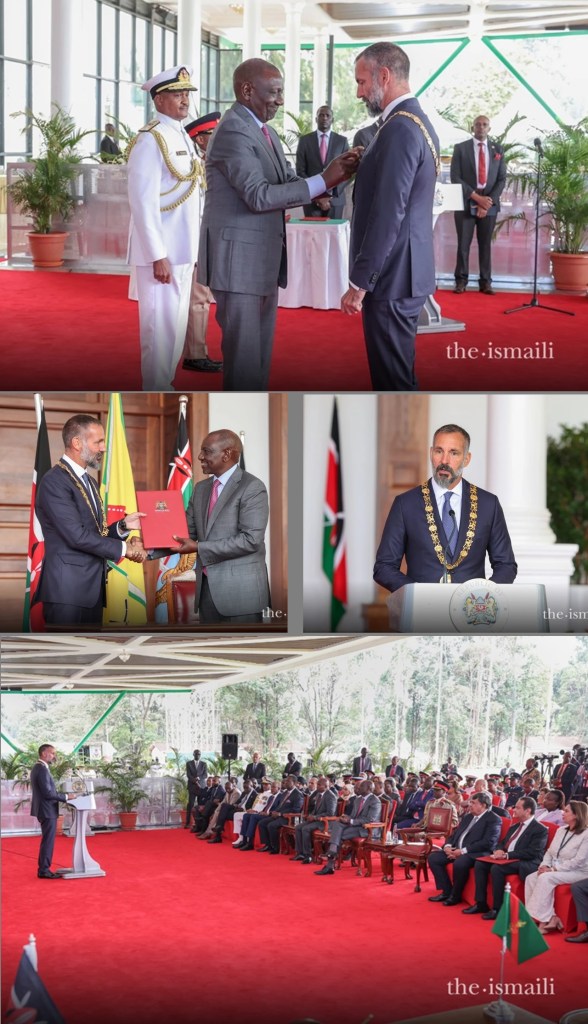
Bismillah-ir-Rahman-ir-Rahim
Your Excellency President Ruto
Honourable Ministers
Your Excellencies
Distinguished Guests
Let me say first how grateful I am to Your Excellency President Ruto for your warm hospitality and kind courtesies extended to me on my first visit to East Africa since my accession to the Ismaili Imamat earlier this year.
Kenya has always held a very special place in the hearts of my family. Some of the earliest Aga Khan development projects from the time of my great grandfather were launched in this country; and many of these are still operating today. His Highness Aga Khan IV, my late father, spent his early childhood in Nairobi. And like my uncle Prince Amyn, who also spent his childhood here, my father always cherished memories of this beautiful country and its wonderful people. My two sons and I greatly enjoyed our visits here, and we look forward to many more in the years ahead.
For over a century, members of the Ismaili community have called this country home. They have contributed to Kenya’s progress and drawn inspiration from its spirit of unity and diversity. It’s against this backdrop that I am profoundly honoured to be named a Chief of the Order of the Golden Heart. I am most deeply grateful to you President Ruto for this award – and for his warm welcome. This recognition carries added significance for me because my late father was also named a Chief of the Order of the Golden Heart by President Kibaki during his Golden Jubilee.
I therefore accept this great honour with deep humility and gratitude. It is a privilege to be here today among the leaders of a nation with which the Ismaili Imamat shares a long friendship, profound respect and deepening partnership.
Through the work of the Aga Khan Development Network – whether in health, education, culture, economic development, or the environment – our aim has always been to improve the quality of life for all, regardless of background or faith. We are proud that our programmes and institutions serve millions of Kenyans from all walks of life, across the spectrum of human endeavour. In Kenya, we have found a Government and a society that have consistently welcomed these efforts, and supported them with vision and resolve.
The Memoranda of Understanding we are signing today build upon this rich legacy of engagement. They reflect the depth of the relationship between the Ismaili Imamat and the Republic of Kenya. And they signal a shared ambition to make that relationship even more impactful. Our goal is to work alongside the Government as you tackle the emerging challenges of climate change, urban regeneration, and delivery of public services. Our approach will be to ensure that our programmes are meaningfully aligned with Kenya’s national priorities and the Bottom-Up Economic Transformation Agenda. As in the past, we will continue to mobilise not only our own institutional capacity and resources, but also those of our international partners and investors, for Kenya’s benefit.
Kenya has shown commendable leadership in confronting climate challenges. The Ismaili Imamat shares the sense of urgency and importance you attach to these threats. And I am committed to ensuring that our institutions support your efforts to create new knowledge and new solutions for environmental stewardship. We see promising opportunities for collaboration in areas such as coastal regeneration and climate research, where our institutions are prepared to dedicate increased resources in pursuit of our shared goals.
In closing, let me once again thank you, Your Excellency, for your warm hospitality and the honour that you have conferred on me today. I accept this decoration as a recognition of the past, but also as a pledge for the future. A pledge to continue walking side by side with the people of Kenya in the pursuit of a more inclusive, equitable and hopeful tomorrow.
I thank you most sincerely.
Asante sana.
______________________
September 11, 2025: Speech by His Highness the Aga Khan at the inauguration of AKU’s academic facilities and the commencement ceremony for AKUH Kampala
(Read at source HERE)
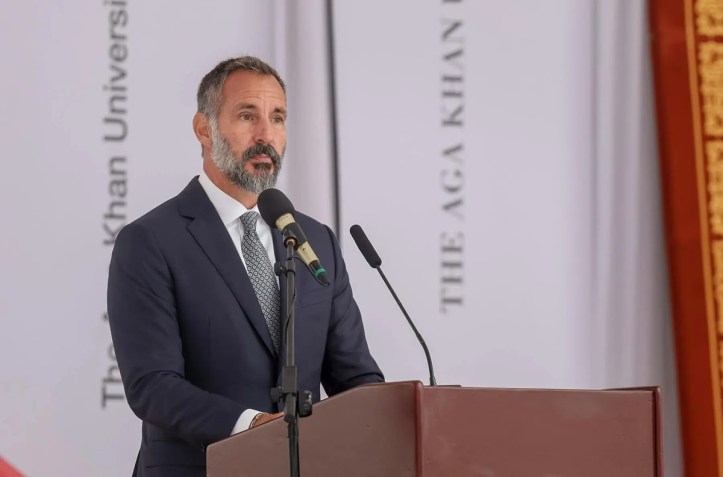
Bismillah-ir-Rahman-ir-Rahim
Your Excellency President Museveni,
Your Excellency the First Lady and Minister of Education and Sports, Mama Janet Museveni,
Excellencies,
Distinguished Guests,
It is a great pleasure for me to join you in celebrating this milestone in the history of the Aga Khan University, and our partnership with the Government of Uganda. I am also very happy that my sister Princess Zahra and brother Prince Aly are here to share this special moment.
I would like to begin by conveying my deepest gratitude to Your Excellency President Museveni for providing the University with an exceptional site for its campus, and for your steadfast vision and enduring support for this project. I also express my heartfelt appreciation for the enabling environment that the Government of Uganda has created for the Aga Khan Development Network.
Your Excellency, the decades-long partnership between the Government of Uganda and the Ismaili Imamat has enabled our institutions to help improve the quality of life for all Ugandans across the country, and across multiple sectors, including health care, education, banking, insurance, energy, hospitality, and manufacturing. We are deeply grateful for your support.
This investment in AKU’s new academic and student housing facilities, together with its hospital, embody the belief of our late father, which I share, that Ugandans deserve the very best access to international quality higher education and health care. The University’s campuses across Kenya, Tanzania, and Uganda create an integrated system to share knowledge and expertise, and allow the mobility of faculty and students across the region.
Our commitment to international standards of excellence will, I believe, bring transformational impact to Uganda and to the region. It is a known fact that poor-quality health care costs as many lives as lack of access to care. Moreover, despite spending years in school, countless young people acquire only a fraction of the knowledge and skills they are meant to. Poor health and limited education rob individuals of their potential. At this campus, AKU will invest in developing the potential of Ugandans. My hope is that ambitious young people and skilled professionals will not need to leave their home country to study or practise at the highest level. And many Ugandans will not have to travel abroad to obtain advanced health care.
Our pursuit of excellence will go hand-in-hand with a commitment to access for the disadvantaged. AKU already provides nearly 60 million dollars annually in financial assistance to patients and students across its campuses. Here in Uganda, we will expand our programmes to enable access to life-saving care and life-changing education.
Excellence must be grounded in relevance. A significant aspect of AKU’s impact is tied to its research agenda that strives to address real, local challenges through knowledge creation and innovation that improve the quality of life. At this campus, we will be addressing Uganda’s specific disease burden, genetic profile, and environmental context. We will seek to contribute to the development of solutions powered by new technologies such as artificial intelligence.
All of this is only possible because of the generosity, commitment and dedication of our wonderful donors, both local and international, and many of whom are of Ugandan origin. I am very happy to see so many of them here today. We are equally grateful to Germany’s BMZ and KfW for their support not only to this project but to many others across the AKDN institutions. Please accept my heartfelt thanks for all that you have made possible – here in Uganda and across our University. Your generosity will benefit countless lives and generations to come.
Our architects, Legorreta, also deserve recognition and our gratitude. The buildings we are inaugurating reveal the power of design to support and to inspire the quest for knowledge. They also reflect the AKDN’s commitment to addressing climate change. Designed to meet international energy-efficiency standards and to be powered by significant solar photovoltaic capacity, they will contribute to our efforts to achieve net-zero emissions.
As we move forward, AKU will continue to benefit tremendously from our partnerships with academia, government, civil society and others. I am pleased that AKU is pursuing effective working relationships with public-sector institutions in Uganda. It is partnership that turns ripples of change into waves of progress.
Distinguished guests, it is my conviction that the creation of this campus will prove to be a significant milestone in the history of higher education and health here in Uganda. As we embark on this new chapter of AKU’s story, our partners and generous supporters are among its primary authors. The leaders educated, the lives saved, and the knowledge generated will be their legacy.
Your Excellency, Mama Janet, I am confident that the leaders emerging from this institution will advance individual well-being and national progress in fulfillment of the steadfast vision and enduring support that have brought us to this moment.
Thank you.
______________________
September 15, 2025: Remarks of His Highness the Aga Khan at the Aga Khan Award for Architecture prize-giving ceremony, Bishkek, Kyrgyzstan
(Read at source HERE)
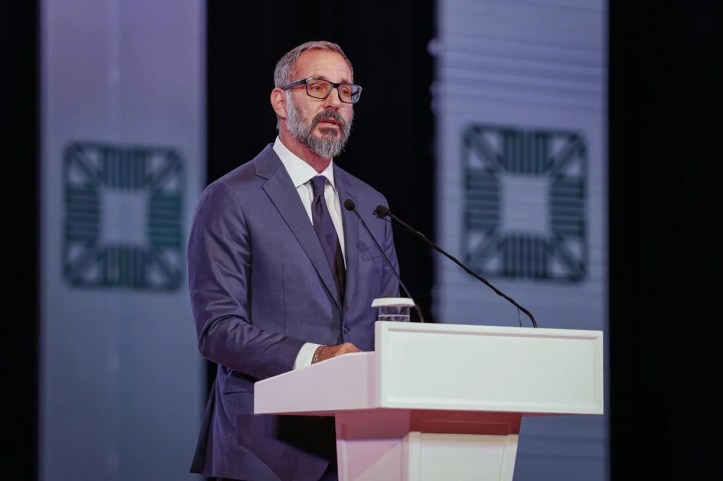
bismi’l-lahi’r-rahmani’r-rahim
Your Excellency Adylbek Kasymaliev, Chairman of the Cabinet of Ministers,
Head of the Presidential Administration,
Excellencies,
Distinguished Guests,
It is my distinct pleasure to welcome all of you to this Award ceremony in this beautiful venue.
It is almost 50 years since our late father established the Aga Khan Award for Architecture. I say “our father” because my brothers are here — not because I’m referring to myself with the royal “we”. In the decades since, the Award has recognised dozens of innovative creators and buildings around the world. It has influenced international discourse, promoting new ideas and solutions, and creating more projects today conceived, designed and built with people as their priority.
The Award ceremonies were ones our father looked forward to tremendously. And I would like to thank all the people who worked with him over the many decades to make this Award such a vital part of his legacy.
This is also an occasion to mark 25 years of partnership between the Aga Khan Development Network and the Kyrgyz Republic. Kyrgyzstan’s recent growth and development have been remarkable. Under President Zhaparov, the Government has taken great strides to translate hard-won economic success into a better quality of life for citizens, through expanded access to public services and targeted support for vulnerable households.
The government has expanded green spaces, established new learning environments to foster creativity and innovation, and built dignified housing for civil servants, especially those working in remote areas. All of these are significant investments not just in physical infrastructure, but in human well-being.
We should all pay tribute to President Zhaparov for his leadership in advancing the international Mountain Agenda, and spearheading the country’s Jashyl Muras (Green Heritage) campaign, an ambitious initiative to safeguard Kyrgyzstan’s precious natural landscapes through conservation, reforestation and sustainable development. Kyrgyzstan’s ecosystems are vital for the entire Central Asian region, and it makes these efforts all the more significant.
Kyrgyzstan has a rich cultural heritage. The country’s musical traditions, passed down from generation to generation, have contributed to the world’s musical legacy. Bishkek is home to one of the most prestigious centres devoted to musical education, the Abdraev School, which maintains old bonds of collaboration with the Aga Khan Music Programme.
I’m happy that we’re partnering with the Government to build a new Music Centre at the Abdraev School site. We hope the new centre, equipped with the state-of-art facilities for music education and interpretation, and an auditorium, will be a symbol of excellence and will support the Government’s aim to leverage architecture to celebrate and preserve the nation’s heritage.
Our work on a new music centre adds to the long history of our investments in this country. For more than two decades, AKDN agencies have established and operated strong national institutions, like the Kyrgyz Investment and Credit Bank, in support of national development priorities. Last year alone, the Aga Khan School in Osh, the University of Central Asia and the Aga Khan Foundation served more than 100,000 learners across this country.
Through our collaboration with the Government and our partners, and I’m delighted to see many here today, we will continue to help individuals develop skills and create opportunities for themselves, for their communities and for this beautiful country.
One of the reasons that our father was so passionate about architecture was its power to improve the lives of the poor and marginalised, which is why this Award places such emphasis on buildings that address social and environmental needs. To quote my father: “I believe profoundly that architecture is not just about building. It is a means of improving people’s quality of life. At its best, it should mirror the plurality of cultural traditions and the diverse needs of communities… Each generation must leave for its successors a wholesome and sustainable social and physical environment.”
Buildings have power. They can raise living standards, inspire reverence and awe, and solve – or create – problems for generations to come. In this most recent cycle of the Aga Khan Award for Architecture, for instance, we have projects that cool soaring temperatures in Iran, that mitigate climate displacement in Bangladesh, and that promote inclusivity and pluralism in Egypt.
Today, more than ever, with the vast range of materials and techniques that humans have invented, great architecture has the power to answer directly to the most acute development challenges, and to create the inclusive, safe, dignified world that we want for everyone.
One of the biggest threats that we face globally is of course climate change. We know that every human activity will now need to adapt to it. Here, architecture offers great hope. Humans have always designed their buildings as a response to the climate. Today, with the climate more volatile than ever, architects have a great responsibility, and an opportunity, to use their creativity to design the buildings that will buffer that volatility and protect us all – and especially the most vulnerable – from climatic risk. This quality – flexibility in the face of the unexpected – was at the heart of the jury’s concerns in this cycle of the award.
Climate change is far from the only development challenge architecture has to meet. As I said, we look to our built environment to raise the quality of life for all, and to resolve issues of social as well as environmental justice. It is not an exaggeration to say that affordability of our housing, ease of access to green space, education, health and cultural heritage all hinge on the creativity of our architects and the wisdom of our civic planners. Creative designs that centre these priorities can widen access, both from the top down – by giving governments more and better options to commission – and from the bottom up – by giving people less expensive and better options to build themselves. There is no one recipe for excellence, because every country has its own unique challenges, but the qualities this Award is looking for will always endeavour to respond to those challenges in some manner.
In today’s era of waning trust, the Aga Khan Award for Architecture’s judging process remains an oasis of rigour. The judging process is uncompromising. It draws on extensive documentation, interviews and site visits to ensure that no detail is overlooked. The Award examines each project meticulously, looking to recognise those that promote values of equity, participation, environmental sustainability and good governance, while transcending their given constraints – whether economic, social, ecological, political, or technological. Some of the projects will only reveal the full extent of their impact in the years to come, but we are confident that all of them will do so.
Finally, I would like to thank all of you for being part of this ceremony, and for honouring these worthy winners, all of whom have shown us once again the power of architecture to answer the development challenges of this age and, in doing so, elevate us all. Let us continue to ensure that what we build reflects not only our creativity, but also our compassion, our responsibility and our shared vision for a just and sustainable world.
Thank you.
______________________
Section 2: His Highness the Aga Khan’s Speeches before becoming the 50th Imam on February 4, 2025
September 2007: Commencement address by Prince Rahim Aga Khan at the Graduation Ceremony of the Institute of the Ismaili Studies, London, UK
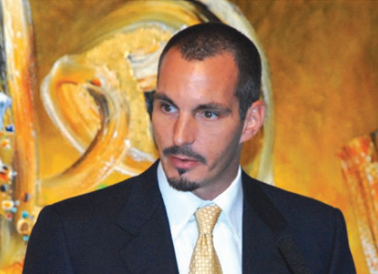
I am thrilled to join the graduation ceremony in honour of those completing the IIS [Institute of Ismaili Studies] Graduate Programme in Islamic Studies and Humanities. To you, to your families and to all those who have helped you in this achievement, I say mash’Allah.
I am convinced that the institutions of the Imamat and of the Jamat could benefit directly from the contribution of each of you, either in a professional or a voluntary capacity. Such a contribution would certainly be in keeping with the ethic of our faith that makes it incumbent upon each of us to use our blessings –- be they material or intellectual –- to assist our families, to serve the Jamat and the Ummah, and to help improve society, and indeed, all of humanity. The Jamat and its institutions need young and dynamic women and men like you, who are able to draw on the rich heritage of our past, and on the best educations of the present, to address the challenges of the future.
Education, international studies and diplomacy, non-profit leadership, media, development, law, and regional studies will all be among the most relevant fields of expertise in the decades ahead. This will be particularly true in the developing world.
I was impressed to learn that amongst you are represented five different nationalities, as are several diverse cultural traditions of our Jamat. I am certain that this diversity has enhanced your classroom experience, and I am confident that it will have given you a deeper appreciation of the meaning and value of diversity itself.
We are all aware that we live in a world where diversity is often evoked as a threat and, more particularly, where diversity in the interpretation of a faith can be seen as a sign of disloyalty. This phenomenon is sometimes perceived to apply principally to Muslims, but it also exists in other societies. Absolutist, exclusivist, and rejectionist claims to the truth, especially to religious truth, are increasingly heard from all quarters. Rather than seeing religion as a humble process of growth in faith, some people presume to claim that they have arrived at the end of that journey and can therefore speak with near-divine authority.
Unfortunately, in some parts of the Muslim world today, hostility to diverse interpretations of Islam, and lack of religious tolerance, have become chronic, and worsening, problems. Sometimes these attitudes have led to hatred and violence. At the root of the problem is an artificial notion amongst some Muslims, and other people, that there is, or could ever be, a restricted, monolithic reality called Islam.
Our Ismaili tradition, however, has always accepted the spirit of pluralism among schools of interpretation of the faith, and seen this not as a negative value, but as a true reflection of divine plenitude. Indeed, pluralism is seen as essential to the very survival of humanity. Through your studies you have known the many Qur’anic verses and hadiths of our beloved Prophet Muhammad (peace be upon him) that acknowledge and extol the value of diversity within human societies. You all know, I am sure, the hadith to the effect that differences of interpretation between Muslim traditions should be seen as a sign of the mercy of Allah.
It should also be clear to anyone who has studied Islamic history or literature, that Islam is, and has always been, a quest that has taken many forms. It has manifested itself in many ways — in different times, amongst different peoples, with changing and evolving emphases, responding to changing human needs, preoccupations, and aspirations.
Even during the early centuries of Islam, there was diversity of intellectual approaches among Muslims. Today, however — both outside the Islamic world and inside it — many people have lost sight of, or wish to be blind to, Islam’s diversity, and to its historical evolution in time and place along a multitude of paths. It befalls us, then, to help those outside the Muslim World to understand Islamic diversity, even as we provide an intellectual counterpoint to those within Islam who would reject it.
I hope that you, as graduates of this programme, will include this message in your own ways in the years ahead, through your work and your words, by your attitudes, by your actions, and by example.
The untrue and unfair, but increasingly widespread equating of the words “Islam” and “Muslim” with “intolerance”, sometimes even with the word “terrorism”, could lead some Muslims to feel despair, indignation, or even shame. To me, however, the current global focus on the Muslim world, and on Islam itself, presents a golden opportunity for us to educate and enlighten, while actively exemplifying the counterpoint I mentioned before. To my eyes, it creates an opportunity, and an even-greater obligation for us to make a positive and visible impact on the world – on culture and art, science and philosophy, politics and ecology, among others.
In order to respond to this opportunity, it will be crucial to reverse another damaging consequence of intolerance, which has been the dissuasion of many Muslim populations from seeking access to what has been called the Knowledge Society. Without an acceptance of diversity, without the ability to harness the creativity that stems from pluralism, the very spirit of the Knowledge Society is stifled. We must encourage, I believe, that Muslims of all communities come together, working collaboratively to tap into the vast endowment of knowledge available today, and without which progress is, if not halted, at least deferred. This cannot be done in the absence of open-mindedness and tolerance.
Implicit in this approach is the need for humility, which is also a central Muslim value. We must all search for the answers to the challenges of our generation, within the ethical framework of our faith, and without pre-judging one another or arbitrarily limiting the scope of that search. Like the great Muslim artists, philosophers and scientists of centuries past, we must enthusiastically pursue knowledge on every hand, always ready to embrace a better understanding of Allah’s creation, and always ready to harness this knowledge in improving the quality of life of all peoples.
As you look towards the future, I hope that you will remember that intellectual pursuits should, wherever possible, seek to address the universal aspirations of humankind, both spiritual and concrete. Those aspirations, for our generation more than for any before, are intertwined in a single global community.
It can be overwhelming at times to ponder the vast array of new problems which seem to multiply in this globalised world.
These include the implications of new technologies and new scientific insights, raising new ethical and legal questions. They include delicate and complex ecological issues, such as the great challenge of climate change. They include matters ranging from the widening gap between rich and poor, to issues of proper governance and effective, fair, and representative government, and to the spread of rampant consumerism and greed, at the expense of others, or of our environment. In some communities, illiteracy and innumeracy are not only continuing problems but are even growing problems. And our challenges also include the increasing difficulty of nurturing pluralism in the face of strong normative trends – finding ways to accommodate our differences – even as hugely differing peoples find themselves in much closer contact with one another.
You have been engaged in studies, some of which analysed the achievements of past Muslim civilisations. What I hope you have come to see is that understanding past Muslim achievements, traditions, values, and ethics should also have equipped you exceptionally well to address the great emerging issues of our own times.
As you now graduate into this challenging world, you will be taking with you the hopes of those who founded, and of those who now drive this study programme. Their central hope is that you will become global leaders in a variety of fields, bearing with you as you go, and applying always, the open-mindedness of our tradition, and the ethics of our faith.
______________________
March 23, 2011: Speech by Prince Rahim Aga Khan at the inauguration of the new head office of the Kyrgyz Investment and Credit Bank
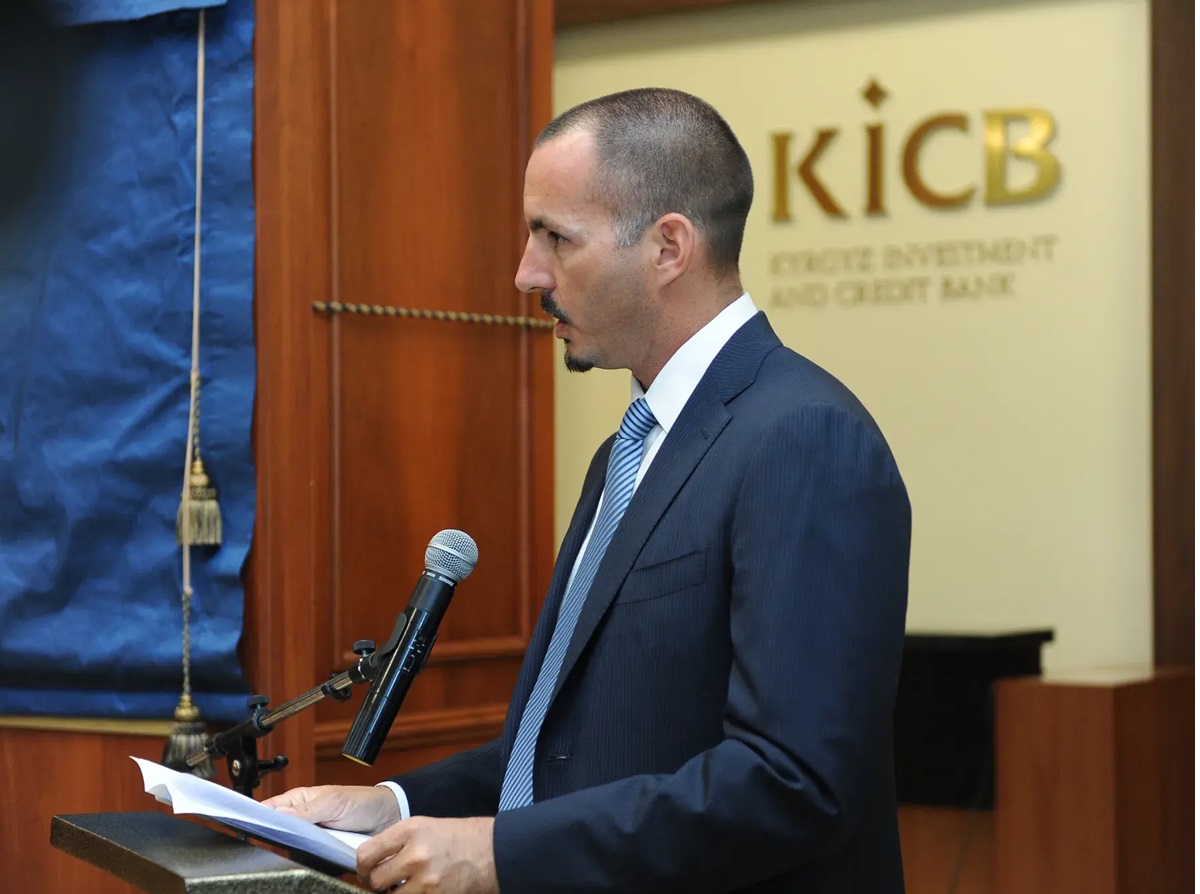
Your Excellency President Otunbaeva Honorable Speaker of Parliament Excellencies Distinguished guests
Today is truly a special day—and for several reasons.
First, it comes at a special time of the year.
The festival of Navroz is a time when we think about renewal and rejuvenation—when we welcome a new spring season in a spirit of hope and optimism.
And that spirit is very prevalent as we gather here today to mark the opening of a new head office for KICB—and as we celebrate the spirit of forward-looking progress in the Kyrgyz Republic.
Second, this is a special day because of the people with whom we are sharing it. It is a particular honor for me to be here with President Otunbaeva, who I understand has rearranged her busy schedule to be with us today.
Thank you Madame President.
I would also like to thank His Excellency Akhmatbek Keldibekov the speaker of Kyrgyzstan’s National Assembly for joining us here today.
Thank you Mr Speaker.
And third, this is a special day because of what this event symbolizes. We can reflect today on the decade long story of KICB’s growth and progress–and we can think ahead to a future of continued achievement and success.
We also recognize today some of the qualities which have produced these past accomplishments, and which I believe will be key to future successes.
One important ingredient has been a spirit of broad based cooperation: From the very start, international cooperation has been a KICB watchword, as the Government of the Kyrgyz Republic and the National Bank were joined in FOUNDING this company by development and financial institutions from many parts of the world. Those of us who are associated with the Aga Khan Fund for Economic Development were deeply pleased to be a part of this collaborative endeavor.
This spirit of cooperation has characterized not only the shareholders of KICB, but also its management and its highly professional staff. As we recognize them, we admire the way the Bank has evolved as one team—bringing together people of diverse backgrounds. Today, in both its internal operations and its external actions, KICB represents the spirit of pluralism, and the conviction that diversity is a source of strength and vitality.
We salute today KICB’s resolve to serve the entire spectrum of the country’s population by offering a variety of financial products and solutions. The aim is to ensure economic empowerment ranging from the small and medium enterprises to large scale corporate organizations. The Bank’s policies recognize that the strength of any society—as a whole — will ultimately depend on the progress of each of that society’s parts.
The Bank’s approach also reflects another principle of our Network, the need for multiple development inputs. What this means is that forward steps in one area—such as education or health —will work best when they are combined –and coordinated– with other initiatives—for example in transportation, or energy supply, or agricultural production. Business investments must go hand in hand with social investments.
The Aga Khan Development Network is deeply committed to these principles. We seek to work closely with a broad range of partners—including government, civil society, international development agencies and others – in the widest possible range of sectors and areas, from micro lending to retail banking, from primary schools to universities. Two examples here in Kyrgyzstan would be the Aga Khan School in Osh and the University of Central Asia in Naryn.
As we look to the promise of tomorrow—for this Bank , for this country, and for this region of the world—we realize that long journeys start with small but solid steps, and that each success we achieve will contribute to future progress. I am here today to pledge the continuing support of the Aga Khan Development Network to the future growth of KICB, including its expansion into every part of this country—and, beyond that, to other countries of Central Asia.
I was happy to hear that the shareholders of KICB have in principle approved a further capital increase for the bank, despite the difficulties which the world economy has recently faced. This decision is a reflection of the shareholder’s commitment not only for the future growth of the bank, but more importantly for the future development of the country.
It is also very encouraging to note the Government’s support, under the President’s leadership–in providing a healthy enabling environment for foreign direct investment. The measures taken thus far have done a great deal to build investor confidence.
I express my gratitude to the Government and the Central Bank for welcoming these initiatives and I am confident that through collaboration and common understanding, we will continue to make a difference as we pave the way for greater social and economic opportunity.
We understand how difficult these recent times have been for the people and the leaders of the Kyrgyz Republic. We admire the strength and the optimism with which so many of you have persisted in building for the future. We are inspired by your example—and we are united with you in working to strengthen the forces of progress.
My thanks again for your warm welcome on this very special and exciting day.
____________________
July 23, 2016: Remarks by Prince Rahim Aga Khan at the Ismaili Games in Dubai – Video and an excerpt
VIDEO
The following is an excerpt from remarks by Prince Rahim Aga Khan at the Opening Ceremony of the 2016 Jubilee Games in Dubai, United Arab Emirates, July 23, 2016 (watch the full speech above).
“I would like to congratulate everyone who is participating in and helping out in these games, as well as those who participated in and helped to organise the events leading up to them for their collective effort to promote fitness and camaraderie through sports. In the current times, I can think of no better way than this and of no better place than Dubai to promote the notion of bringing young minds from diverse backgrounds and different environments together in the spirit of friendship and peace. I know the efforts that all you young and able athletes made to come here. I salute your resolve and I pray that you may carry that spirit of friendship and peace with you when you return to your homes.”
_____________________
September 6, 2016: Remarks by Prince Rahim Aga Khan at the Opening of World Nomad Games at Cholpon-Ata, Kyrgyzstan
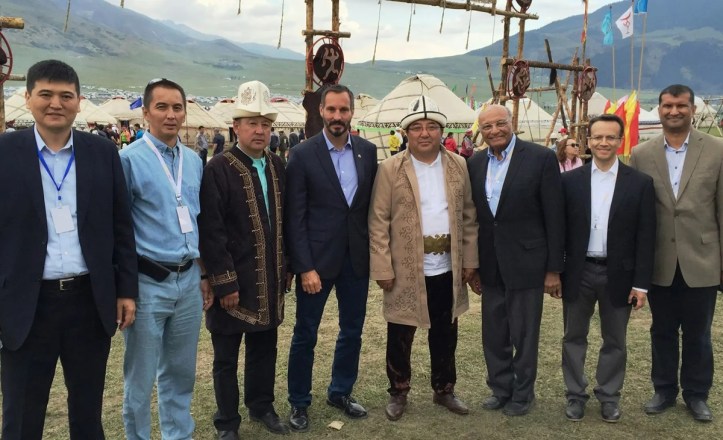
Representing His Late Highness the Aga Khan (d. February 4, 2025), Prince Rahim Aga Khan attended the official opening of the Second World Nomad Games, 2016, at the invitation Kyrgyzstan’s President, H.E. President Almazbek Atambayev. Some 2,000 athletes from 40 countries are participating in over 20 sports competitions. These included wrestling, horse racing, archery, horseback wrestling, kok-boru, Central Asia’s most renowned horseback competition and toguz korgool (a nomadic intellectual game).
In his brief remarks, Prince Rahim said:
“I am delighted to be back in Kyrgyzstan to enjoy its stunning landscapes, traditions of hospitality and to meet old and new friends. It was a pleasure to witness the spectacular opening of the Second World Nomad Games and in particular to experience the enthusiasm of the Kyrgyz peoples for their nomadic traditions,” ecially built for the second day of the ceremonies, the Naryn Governor, Amanbai Kayipov, remarked, “We are honoured by your presence and look forward to welcoming you to our oblast to see first-hand the positive contribution of AKDN programmes to the lives of the people.”
_____________________
November 24, 2017: Remarks by Prince Rahim Aga Khan at the celebration marking the 40th anniversary of the Institute of Ismaili Studies, London
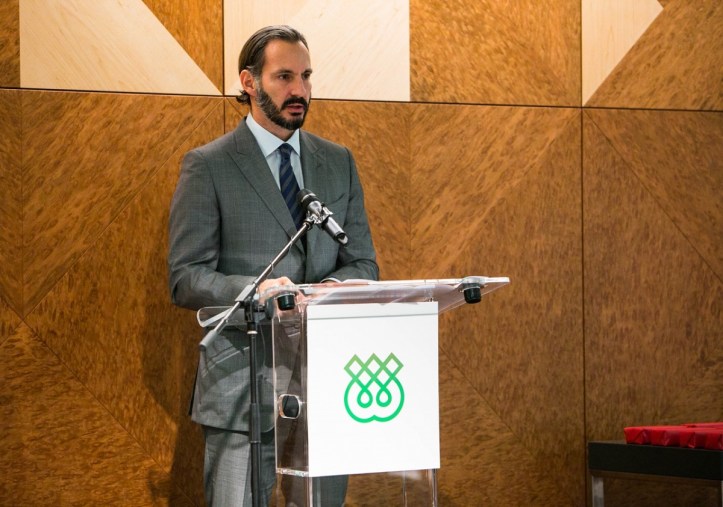
Prince Rahim Aga Khan was the guest of honour at a celebration hosted by The Institute of Ismaili Studies (IIS) in London, to mark its 40th anniversary. The event was held on November 24, 2017. The following are his remarks
“Forty years may feel like a long time, but it’s a very short time in the life of an academic institution. IIS is a unique institution in terms of its mandate and role and it hasn’t simply been following an established model which has been implemented before…. this anniversary is an opportunity to reflect on our progress and achievements, and to celebrate the people who have made them possible.”
Prince Rahim also remarked that IIS students are the lifeblood of the Institute and our future leaders, and acknowledged the importance of the IIS as a whole to the Jamat over the past 40 years.
“We have seen in these last decades the globalisation of the Jamat and its patterns of migration, which have made it even more important to be able to provide the Jamat with authentic and well prepared materials which enable an understanding of its history and of its heritage and of matters of the faith and its practice.”
He also recognised that the IIS has benefited from generous support from the Jamat, which has helped make their 40 years of work possible.
_____________________
2020: Remarks by Prince Rahim Aga Khan during the launch of Earthshot
“The Aga Khan Development Network is proud to be a Founding Partner of The Earthshot Prize. It is our collective responsibility to be good stewards of the planet. At this critical moment, we must all nurture and invest in solutions that can repair our planet before it is too late.
“The AKDN has been working for over a century in Asia and Africa to improve quality of life – through education and healthcare, livelihoods and infrastructure, and long-term institutions of civil society. The decades of progress now hang in the balance: environmental degradation and climate change will wipe out these gains entirely unless we act now with urgency and conviction.
“To do its part, AKDN has a net-zero carbon target for its own operations and will mobilise its agencies to mitigate the effects of climate change and help vulnerable communities to adapt. We are excited to partner with The Earthshot Prize which, over the next decade, will identify fifty solutions with the potential to keep our planet habitable. Working together, we can and must help ensure a future for life on Earth.”
____________________
March 19, 2022: Speech by Prince Rahim Aga Khan at the inauguration of the Aga Khan Academy Maputo, Mozambique
This speech was delivered by Prince Rahim Aga Khan on behalf of his father, Mawlana Shah Karim, His Late Highness Aga Khan IV.

Bismillah-ir-Rahman-ir-Rahim
Your Excellency, President Nyusi, Republic of Mozambique
Your Excellency, President Marcelo of the Portuguese Republic
Your Excellency, President Chissano
Honourable ministers and excellencies
Students, parents, and staff of the Aga Khan Academy
Todo protocol compredo
Ladies and gentlemen
On behalf of His Highness the Aga Khan, good afternoon. Your Excellency, President Nyusi, without your friendship and your support for this project we would not be here today. Under your leadership, the Mozambican authorities provided the enabling conditions for this project to see the light of day. We are inspired by your leadership and honoured by your presence – thank you.
Excellency, President Marcelo, your presence here today is a symbol of the deep friendship between the Ismaili Imamat and the Republic of Portugal, and we are honoured and grateful that you are here with us.
Excellency, President Chissano, I know that my father the Aga Khan and Your Excellency first discussed education in Mozambique some five decades ago. And that you are here today for this inauguration is an honour and a joy – thank you. I wish to thank our friends at the Agence Française de Développement for their collaboration on this academy project. They are a longstanding and valued partner of the Aga Khan Development Network, and we appreciate them deeply.
This Academy is one among a growing network of integrated Aga Khan Academies comprising Mombasa, Kenya; Hyderabad, India; Maputo; Dhaka, Bangladesh, currently in construction; and Lisbon, Portugal, in the design phase. These will be followed by Islamabad, and Inshallah several more. The wide geographic spread of the Academies is by design – to allow students and staff to seamlessly travel to academies in other countries, see different cultures, and build an appreciation and a love for them. The intercultural awakening that we hope will be experienced at the Aga Khan Academies is further enhanced by their highly diverse student bodies. For instance, in this academy, half the students are Mozambican, while the other half hail from 23 other countries.
It is no accident then, that one of the Aga Khan strands with which the Academies complement the International Baccalaureate is pluralism. We know that the Academy students will graduate into a highly interconnected world, and they need therefore to be open minded and exposed to a multiplicity of backgrounds and of views. Further preparing the Academy students, the IB curriculum at this academy is taught in two languages – Portuguese and English – but an almost unlimited number of languages can be learnt here.
As a centre of excellence, this Academy will equip its students with the tools needed to be competitive and to thrive, as they go on to their universities and then enter the arena of adult life. And it will teach them to push themselves to be the best they can possibly be.
But just as important as the academic tools with which the academy will equip its students, are the values they will strengthen here. Indeed, another one of the Aga Khan strands interwoven into the IB curriculum is that of ethics. Ethics are taught here not just in theory, but put into practice in elements of service and of leadership in the student’s daily lives. The Aga Khan Academies intend for their graduates not to be good at subjects only, but good as individuals. While tools are important, the values that drive their use are what will make the world better through these students. Our commitment to our parents, then, is to do our utmost to develop values and ethics in their children, just as we equip them with the practical skills needed to achieve success in their lives.
To the students here today, I would like to share with you one perspective. Throughout your studies and your youth, adults will tell you that the future is ahead of you. I want to tell you that the future is what you leave behind you, shaped by every one of your actions and your statements and your decisions. The future follows behind you in the path that you choose. Look at this academy – it’s an institution born of past decisions and past actions, which now will shape the future: your future, the future of your families, and the future of this beautiful country, Mozambique.
I cannot end today without saying that what I’ve seen here in the last days is a great friendship between the Ismaili Imamat and these two countries. And I think in our organisation and in our community, nobody embodies friendship as much as our diplomatic representative, Nazim Ahmad, without whom perhaps all of this would have been much more difficult. So Nazim, I want to recognise your role in getting us all here today.
Thank you very much.
_____________________
March 31, 2022: Statement by Prince Rahim Aga Khan at the virtual Afghanistan Conference, 2022, Convened by the Governments of Germany, Qatar, the United Kingdom, as well as the United Nations – Video and transcript
Note: The following statement was made by Prince Rahim Aga Khan on behalf of his father, Mawlana Shah Karim, His Late Highness Aga Khan IV (d. February 4, 2025).
VIDEO
~~~~~~~~
TRANSCRIPT
Bismillah-ir-Rahman-ir-Rahim
Excellencies, Ladies and Gentlemen,
On behalf of His Highness the Aga Khan, I thank the Governments of Germany, Qatar, the United Kingdom, as well as the United Nations, for convening this meeting at a time when so many Afghans are in peril.
Since August, despite huge challenges, in cooperation with UN agencies, the Aga Khan Development Network has maintained its life-saving work across Afghanistan: keeping its hospitals and clinics open; assisting communities with food, shelter and livelihoods; and continuing to help thousands of children of both genders to access learning.
That is a sign of the unfailing commitment of the Ismaili Imamat and the AKDN to the people of Afghanistan. Our experience over the past three decades, along with generous support from many international partners, has taught us to believe deeply in the capacity of Afghans, in their pluralism, and in the strength of their vibrant, diverse communities. They have shown time and again that they are resilient and resourceful, but today, they need help.
That is why we urge the international community to support the UN’s humanitarian appeal with generosity and speed. But it must also address the causes of this crisis – the economic collapse, banking and monetary paralysis, and the strangulation of legitimate Afghan businesses and jobs. These deserve equally urgent and practical attention.
Today, we must send a signal of hope to Afghans across the country, and especially at the community level where Afghanistan’s future will be determined. It is there that Afghans of all backgrounds will come together to address their most urgent needs. Let us act swiftly in solidarity, with foresight and with compassion.
Thank you.
______________________
September 29, 2022: Remarks by Prince Rahim Aga Khan at the signing of an Agreement of Cooperation between British Columbia and the Ismaili Imamat, Vancouver, Canada
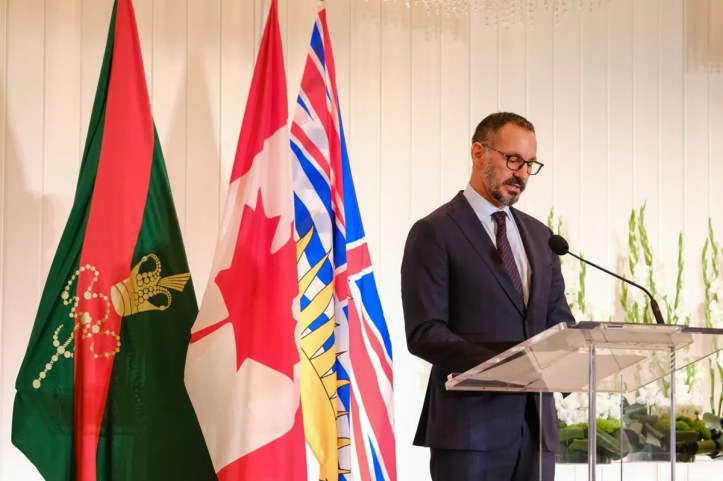
Bismillah-ir-Rahman-ir-Rahim
Honourable Premier John Horgan,
Honourable Katrine Conroy,
Your Honours Janet Austin, Salma Lakhani and Dr Zaheer Lakhani,
Distinguished guests,
First of all, thank you for the warm welcome. It has been really nice. Thank you.
My sister Zahra and I are most happy to be with you here today, and to convey, on behalf of our father, His Highness the Aga Khan, his warmest greetings and congratulations on this important occasion.
He fondly recalls his meeting with you, Premier Horgan, during his Diamond Jubilee visit to Vancouver in 2018, when you both discussed the valued longstanding relationship between the Province of British Columbia and the Ismaili Imamat, and you committed together to strengthening it in the years ahead. And here we are.
Many of the first Ismailis to come to Canada some 50 years ago settled in British Columbia. The Ismaili Centre Vancouver, which was opened in 1985, reflects the community’s permanent presence in, and commitment to, this great province and country. During the past five decades, members of the Ismaili community from across the world have made British Columbia their home, and these individuals and families have established strong roots, contributing to the province’s pluralism, vitality, and cultural, economic and social fabric.
Likewise, the Ismaili Imamat’s relationship with British Columbia has been mutually enriching, and we are immensely pleased to formalise our partnership through today’s Agreement of Cooperation between the Ismaili Imamat and the Province of British Columbia. The agreement reinforces the Imamat’s permanent commitment to this province, and, alongside similar partnerships already in place with Alberta and Ontario, to this great country.
For more than a century, elements of the Aga Khan Development Network have worked to improve the quality of life of vulnerable peoples – irrespective of ethnicity, background, or faith – in some of the most challenging parts of the world. Canada has been a vital partner in that endeavour, over many decades. Our experiences have taught us that access to knowledge and best practice is essential to our effectiveness, and we are deeply grateful for British Columbia’s willingness to collaborate with us in our efforts.
First amongst the challenges and risks that face humanity today is the climate emergency in all its dimensions. The recent devastating floods in Pakistan, for example, illustrate the urgency of the situation. Here in British Columbia, you too experience the heavy consequences of the climate emergency, including extreme heat, wildfires and flooding. And British Columbia has become a leader in the fight against planetary breakdown. Its institutions, companies, and organisations, public and private, are creating new knowledge and identifying innovative solutions in the areas of environmental stewardship, climate adaptation, sustainability and many others.
I am pleased that our teams have already defined and agreed to immediate joint work in this area. The climate adaptation model developed by the Climate Action Secretariat of British Columbia will be used by the Aga Khan Agency for Habitat to assess long-term risks and opportunities in the high mountains of South and Central Asia. The goal is to help communities, some of which have been badly affected by the recent floods, better plan their futures. In turn, we will share our field data and experience to help the Secretariat to refine its already excellent assessment tools. It is our hope that this first project, and the many others that will follow, will enable us to together identify new solutions of value and benefit to the people of British Columbia, Canada, and indeed, many other communities around the world.
British Columbia’s knowledge, combined with the Aga Khan Development Network’s field experience, will enable us to help protect our fragile world, and create a better quality of life for the many people who are already suffering from the effects of climate catastrophe.
I want to express, on behalf of His Highness, my appreciation and gratitude to the people and Government of British Columbia for the 50 years of collaboration and goodwill upon which today’s agreement is built. Accords are created by signing, but relationships are sustained by affinity and warmth. Today more than ever, it is my deep privilege to be able to call British Columbia a partner and a friend.
Thank you.
_______________________
December 9, 2022: Prince Rahim Aga Khan addresses climate issues in Africa at the Kusi Ideas Festival, Nairobi, Kenya – Video
‘’Climate change is the most crucial existential phenomenon that Africa, and indeed the world, is currently facing,” said Prince Rahim Aga Khan. He was delivering an address virtually, to an audience of distinguished guests gathered in Nairobi’s Karura Forest, during the opening of the Nation Media Group’s (NMG) fourth edition of the Kusi Ideas Festival: Climate Change: Exploring African Responses and Solutions. Please watch the following video.
______________________
January 18, 2023: Prince Rahim Aga Khan’s remarks honouring Dr. Farhad Daftary for his contribution to Ismaili research and scholarship

On January 18, 2023, Prince Rahim Aga Khan attended a reception at the St Pancras Renaissance Hotel to honour the contributions of Dr Farhad Daftary to the IIS, and more broadly to the fields of Ismaili and Islamic studies, as he stepped down from his management roles at the Institute. The following are excerpts from Prince Rahim’s remarks:
“I know I speak on behalf of His Highness and for all of us here, and the generations who will benefit from his scholarship, that we are very grateful that Dr Daftary chose this to be his lifetime’s work and that he has made such a major contribution to the field of Ismaili studies.
“His seminal works on Ismaili History are universally recognised as the authoritative sources on this subject matter. His books, journal articles and encyclopaedia entries are referred to and cited by people around the world. This body of work will have a long-lasting legacy, and it has profoundly changed the landscape of Ismaili Studies.”
Prince Rahim announced that Mawlana Shah Karim decided to acknowledge Dr. Daftary’s contributions to the Institute by attaching his name to forthcoming PhD Scholarships awarded by IIS—they will be known as The Farhad Daftary PhD Scholarships. Prince Rahim also recognised Dr. Daftary’s central role not only as a leader but also as the IIS’s most respected and productive scholar and author.
_____________________
fEBRUARY 13, 2023: Speech by Prince Rahim Aga Khan at the World Government Summit Dubai, UAE
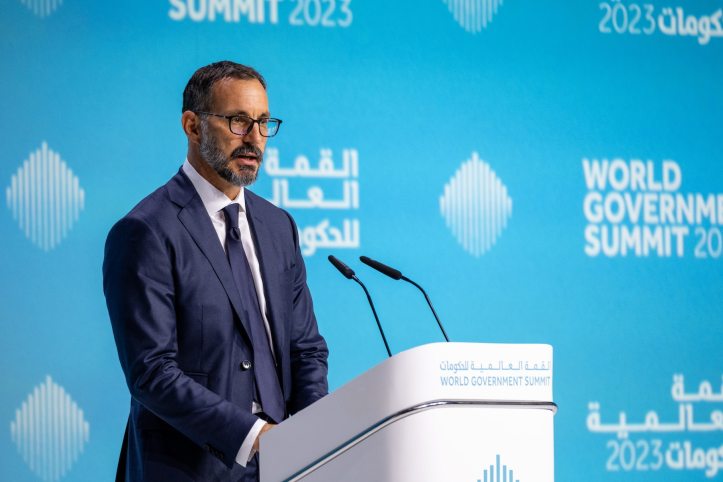
Bismillah-ir-Rahman-ir-Rahim
Your Highnesses,
Your Excellencies,
Distinguished guests,
Ladies and gentlemen,
As-Salaam-Alaikum.
I would like to begin by expressing my gratitude to His Highness Sheikh Mohammed bin Rashid Al Maktoum, Vice President and Prime Minister of the UAE and Ruler of Dubai, and to His Excellency Omar Sultan Al Olama, Director General of the Prime Minister’s Office, Minister of State for Artificial Intelligence, Digital Economy and Remote Work Application of the UAE, and Managing Director of the World Government Summit Organization, for inviting me to speak today.
Since its founding a decade ago, this Summit has enabled the exchange of ideas to advance progress on an array of complex and profound global challenges. The people invited here have the power to influence events, to do great things, and to shape the future, and it is a privilege to join them at this summit.
We are all here to engage in focused and ongoing dialogue about the complexities and trade-offs of such progress, because only through dialogue can we ensure that we make well-informed and wise decisions for the betterment of all our societies.
Looking through this lens, as Chair of the Environment and Climate Committee of the Aga Khan Development Network, I would like to talk about urbanisation in the developing world against the backdrop of climate change.
People are on the move like never before. We are fast becoming an urban world. And the scale and pace of this change is breath-taking. By the middle of this century, it is estimated that eight out of every ten people will live in cities, with much of this urbanisation taking place in the developing world.
How we plan, design, and manage cities in the developing world, therefore, will be of vital importance, both for our fragile planet and for humanity.
In this time of rapid – and often unplanned – urbanisation, I would like to touch on three particularly daunting areas of challenge for us now and in the future: infrastructure; health; and emissions.
First, infrastructure. As cities quickly expand, there is a risk that their infrastructure will fall further behind the increased needs of their growing populations, and that the expansion will not happen in an environmentally sustainable way.
As we look at the future of urban planning, we must put clean infrastructure at the heart of the design and development process if we want any chance of mitigating further global warming. This means designing buildings which minimise heat gain or loss, using green building materials and rooftop solar panels in all future construction, prioritising walking and cycling paths, and ensuring that there is safe, quick and reliable public transport that is powered by clean energy, among other imperatives. In essence, putting sustainability into the heart of our urban infrastructure must become a core requirement as we move forward.
Second, health. Throughout the last centuries, the health of city dwellers increasingly benefitted from better access to education and healthcare, improved living conditions and targeted public-health interventions.
But today, that benefit is less apparent, with hundreds of millions of urban dwellers lacking adequate sanitation or access to clean water, threatened by heat stress, air pollution or suffering the effects of air and waterborne disease, all exacerbated by climate change.
Recognising these issues and devising public policy and service responses to address them will become increasingly important.
Finally, emissions. Although our cities occupy just three percent of the Earth’s land, they account for 80 percent of the energy consumption and at least 70 percent of all greenhouse gas emissions.
Because cities will play such a massive role in the coming decades, they need not only to anticipate and adapt to climate change, but they must also contribute to its mitigation.
We must rapidly and intentionally reduce greenhouse gas emissions from urban centres, as well as use every available solution to draw down greenhouse gases already emitted… and here, research and technology hold huge promise to deliver on that reduction if they are championed by inspired and enlightened governments, businesses, and civil society all working together.
So, how to ensure that global city design incorporates resilience and a sustainable foundation in the future?
On an environmental level, we need to ensure that energy is produced, and natural resources and land are used in a sustainable manner.
And, on a governance level, strong leadership and competent management is key. We need integrated approaches to issues around urban planning, and dialogue to drive good decision making.
On both these levels – environmental and governance – the power of partnership will be paramount. Government, business, and civil society must work together to unlock the best possible future for our cities.
At the Aga Khan Development Network, we have first-hand experience of the value of successful partnership between government, business, and civil society.
For several decades now, the AKDN has been engaged in preserving, restoring, and developing the built environment: historic buildings and public places of practical and cultural significance.
Our work is always rooted in Islamic ethics and tradition. The Qur’an teaches us that as God’s noblest creation, humankind is entrusted with the stewardship of all that is on earth, and that each generation must leave for its successors a wholesome and healthy social and physical environment.
Stewardship of the environment, care for the natural world, sharing of resources, recognition of beauty as a divine blessing, and an environmental ethic are the principles that helped guide the planning of early Muslim cities.
So in our contemporary efforts, the goal has not been simply to honour past cultural milestones, but also to create an environmentally sustainable basis for economic and social progress.
One example of this work is the Al-Azhar Park project in Cairo. Created on the site of a garbage dump, it was developed to provide a new space that could make a major positive contribution to the quality of the lives of people in Cairo.
The Park was opened in 2005 as part of a larger urban rehabilitation initiative, which has delivered education and health services, monument restoration, infrastructure upgrading, vocational training and microcredit to the area.
As a result of the project, we have found that family earnings have increased one-third faster than in the other areas of Old Cairo, literacy rates have climbed by 25 percent and over 20 million visitors have enjoyed the Park to date.
Covering 81 acres in a densely populated metropolis, the Park provides a place where citizens can take in the serene beauty, find refuge from the summer heat, and breathe clean air amidst vegetation that sequesters 750 tons of carbon dioxide equivalent per year.
It is a shining example of what sustainability-minded partnership can unlock for urban populations. It is our hope that we can share our experience with more partners in the future to help create environments where urban communities are set up to thrive in harmony with the natural world.
Ladies and gentlemen, this forum, the World Government Summit, is a fantastic opportunity to raise our common ambitions, to share big ideas, and to inspire positive action in global city design to build a better, more harmonious, and more environmentally sustainable future for humanity and our planet.
It is a true honour to be part of writing this next chapter.
Thank you.
______________________
July 28, 2024: Speech by Prince Rahim at the Aga Khan Qutb Shahi Heritage Park completion ceremony, Hyderabad, India
(Read speech at source HERE)
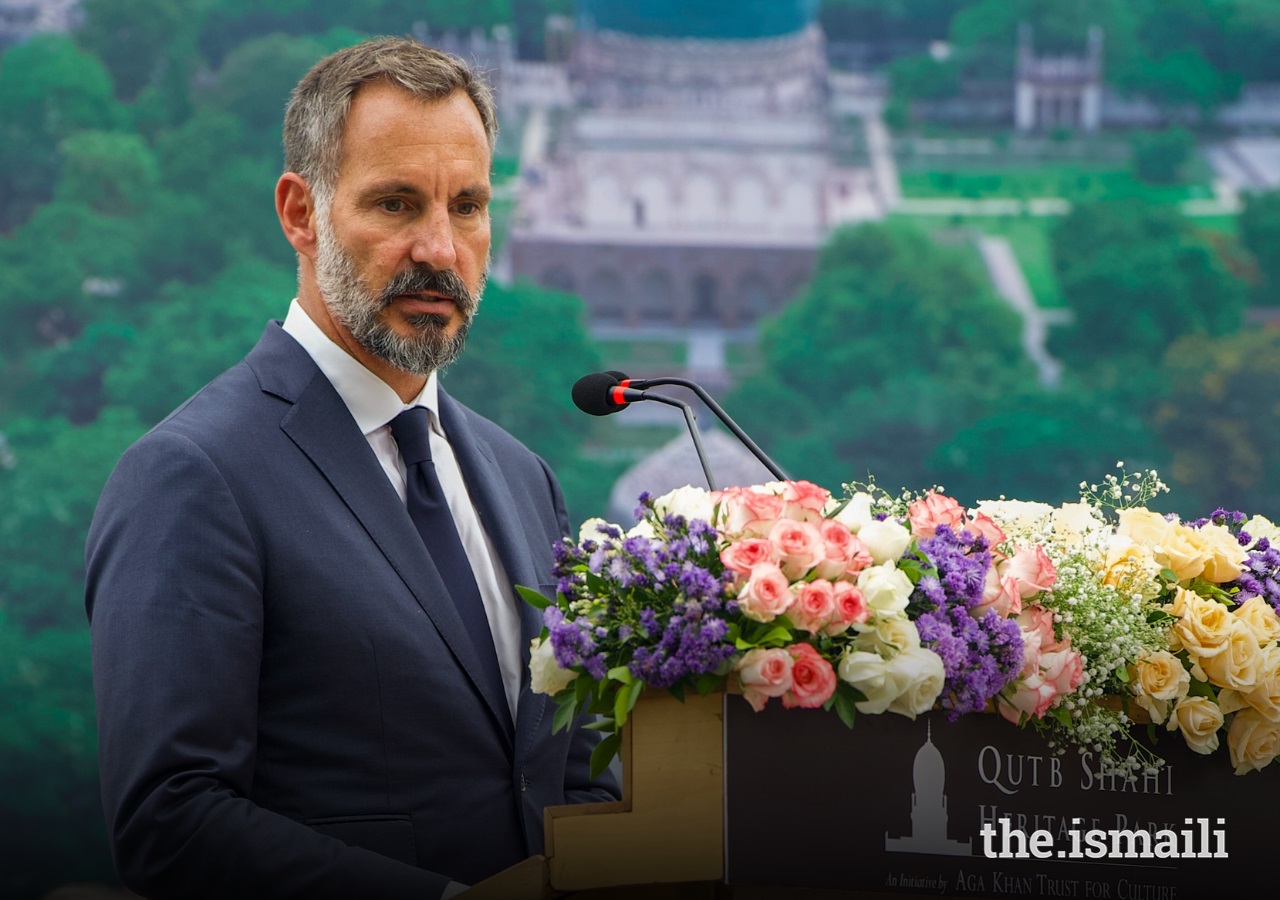
Bismillah-ir-rahman-i-rahim
Honourable Chief Minister of Telangana,
Honourable Minister of Tourism and Culture
Honourable Members of Parliament
Madam Principal Secretary,
Excellencies,
Distinguished Guests,
Ladies and Gentlemen,
May I begin by extending my gratitude to the government and people of India and Telangana for their warm welcome and hospitality.
This magnificent ensemble of pavilions, gardens, stepwells and mausolea within viewing distance of the Golconda Fort is, first of all, a testament to the skill, talent and ingenuity of the people of this city and their forebears. Together with others from near and far, they have demonstrated their commitment to enable the past to inspire the future.
This site is the final resting place of the Qutb Shahi dynasty, which governed Hyderabad for 169 years. As we see when we look around us here, the Qutb Shahis were not only remarkable builders. They were also great patrons of arts and learning.
It is in bringing forth and enhancing that legacy, that the Government of Telangana and the Aga Khan Trust for Culture have worked together to create a unique site, unparalleled in its grandeur, diversity, and completeness. The support, commitment, and dedication of the Telangana government has made this a strong and fulfilling partnership, for which we are deeply grateful.
To our generous donors and partners – the Ministry of Tourism of the Government of India, Tata Trusts, the US Ambassadors Fund for Cultural Preservation, IndiGo Reach, and the German Consulate – are due our warmest appreciation for their support and resolve to preserve and revive this inheritance for the benefit of the whole world.
Twelve years of complex restoration and conservation efforts by the Aga Khan Trust for Culture in this joint venture has conserved almost 100 monuments, and revitalised the landscape and ecology across this 106-acre site.
As we pause for a moment to take in the splendour of this achievement, let us reflect on the energy and dedication of the multidisciplinary team that has undertaken the work.
Craftsmen, using traditional tools, building materials, and valued craft skills, have strived to match the stucco work from five centuries ago.
Landscape architects, ecologists, horticulturists, and gardeners have planted over 10,000 trees, creating an ecological buffer to the heritage zone. Another 5,000 trees are planned.
Six baolis, two of which were discovered recently, were cleared, desilted, reconstructed and restored, and now contribute to a surplus of water to irrigate and maintain the gardens. Since 2022, over 20 million litres of rainwater have been collected annually.
We are honoured to have been instrumental in creating the Qutb Shahi Heritage Park. In doing so, we not only recognise the art, architecture and engineering prowess inscribed in the history of this city, but also address future environmental and climate challenges which are not just cultural or scientific, but concerns of primary urgency.
Beyond the restoration of the built heritage, the strength of this collaborative endeavour lies in its combination of landscape and garden design. The Aga Khan Trust for Culture has created or restored ten major parks and gardens around the world following the guidance of His Highness the Aga Khan, concerning our responsibility to protect the natural world, and to respect the power and mystery of nature.
Indeed, one of the ethical principles of the Aga Khan Development Network, a group of agencies that seek to improve the welfare and prospects of people around the world, is to work towards a sustainable environment, in its physical, social, and cultural dimensions.
Today’s ceremony does not mark the end of the Aga Khan Trust for Culture’s presence in Hyderabad. We are engaged with the Government of Telangana on five other projects in the city, including the Paigah Tombs and the State Assembly. We are also in discussions to establish a management trust for the operations and maintenance of this Heritage Park.
Our work here is part of a multisectoral commitment of the Aga Khan Development Network, and organisations under the direction of the Ismaili Imamat, to the people of Telangana. It remains our hope that our endeavours in education, early childhood development, women’s development, climate action, and disaster risk resilience can continue, under a structured framework, to improve the quality of life for all the people of Hyderabad and Telangana.
I therefore greatly look forward to returning to this beautiful city and to its warm and generous people in the future.
Tomorrow, the Aga Khan Trust for Culture will inaugurate the Humayun World Heritage Site Museum in Delhi, which will enhance the visitor experience to Humayun’s Tomb and Sunder Nursery. A site museum is also planned here, at Qutb Shahi Heritage Park, which will serve both the Park and the Golconda Fort, and which will present the achievements of the Qutb Shahi dynasty.
______________________
July 29, 2024: Speech by Prince Rahim Aga Khan at the opening of the Humayun World Heritage Site Museum, New Delhi, India
(Read speech at source HERE)
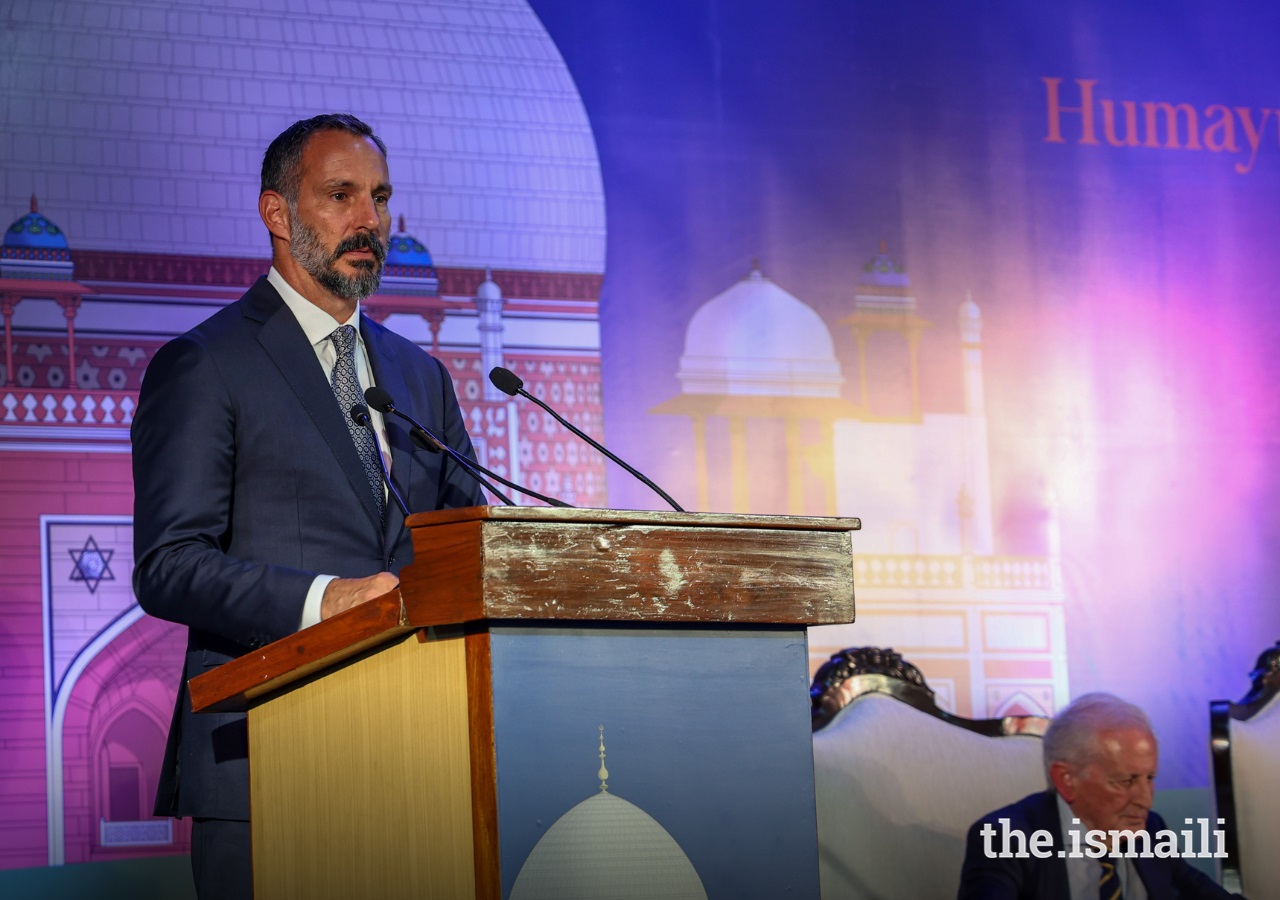
Bismillah-ir-rahman-i-rahim
Honourable Minister of Tourism and Culture of India,
Director General, Archaeological Survey of India,
Excellencies,
Distinguished Guests,
Ladies and Gentlemen,
It is a pleasure to be with you here this evening.
Our gathering today celebrates the culmination of the initiative launched in 1997, when, to mark the 50th anniversary of India’s independence, His Highness the Aga Khan offered the nation and its capital the restoration of the gardens of Humayun’s Tomb.
So began, as a further chapter in a long-shared history, another fulfilling collaboration with the people and government of India.
The Humayun World Heritage Site Museum, inaugurated today, marks an accomplishment well beyond a building sensitively conceived within its landscape, its artefacts and its exhibits, and its intellectual offering. It marks a completion phase of the Nizamuddin Urban Renewal Initiative, a model public-private partnership.
At the turn of the millennium, His Highness the Aga Khan began to envision this entire area as a coherent cultural ensemble in a 300 acre-landscape. Integral to that aspiration was the will to improve the quality of life of the residents of the Hazrat Nizamuddin Basti, and to revive crafts and artistic traditions in danger of disappearing.
Beyond the restoration of the iconic Tomb, its gardens, and another 60 monuments – 20 are which are on the UNESCO World Heritage list – the Initiative has created the 90-acre Sunder Nursery, has upgraded public open spaces, has improved school and healthcare facilities, has implemented education and health programmes, public sanitation, water and waste management schemes, and has sponsored cultural revival through festivals, concerts and performances.
For over two decades now, the Aga Khan Trust for Culture has been honoured to work alongside the Archaeological Survey of India, the Central Public Works Department, the Municipal Corporation of Delhi, corporate and philanthropic partners, international donors, sister agencies within the Aga Khan Development Network, and, most importantly, with the citizens of Delhi and residents of Nizamuddin.
Together, we have strived to create for the world an exemplar of thoughtful, collaborative urban revitalisation.
Museums and historic landmarks preserve and reveal the story of humanity. Inherently, they are places that foster connections among people as we delve into our collective, intricate past, and consider how we can collaboratively shape a unified and better future.
The Museum thus serves as a link, not only joining Humayun’s Tomb with the Sunder Nursery, but also bridging the gap between history and the present.
Blended into the landscape and quietly sunken below gardens and fountains that surround finely crafted mausolea, the Museum will enhance the experience for millions of domestic and international tourists visiting the World Heritage Site. Within its walls, the story of Humayun’s life, travels, and legacy come alive.
The impact of this heritage was its commitment to pluralism, which is reflected in the distinctive architecture, literature, and customs that brought together diverse influences.
To enable a more profound understanding of the architecture and building craft traditions of the passing centuries, the Museum will shed light on the development of the Nizamuddin area over a millennium. It will, in the process, explain the pluralistic traditions that have defined Hindustani culture for at least five centuries.
Date posted: October 10, 2025.
Last updated: October 12, 2025 (updated post, remarks at launch of Earthshot, 2020).
Note: We invite our readers to inform us of speeches by Mawlana Hazar Imam, His Highness the Aga Khan, that we may have overlooked and that are not published in this post.
_________________
Free subscription, FEEDBACK AND Table of Contents
Please click SUBSCRIBE and enter your email address to receive update notifications from Barakah. Before you leave, remember that Barakah’s editor, Malik, is here to assist you. If you have any questions or feedback, please scroll down to leave a comment or send an email to mmerchant@barakah.com. Also, don’t miss the opportunity to explore the diverse and extensive content on Barakah’s Home Page or Table of Contents, with over 350 pieces dedicated to Mawlana Hazar Imam, members of his family and the Ismaili Imamat. And don’t forget to visit our sister websites, Simerg and Simergphotos. You can stay updated by following Malik on @Facebook, @X and @LinkedIn and by subscribing to Barakah.


Thanks for your tremendous efforts in assembling this compilation, Malik. It is of immense value. You have made Simerg an Ismaili site of record. Saligrah Mubarak.
LikeLiked by 1 person
Super work. Thank you!
Fayyaz
LikeLike
Ya Ali madat Malik,
What an extraordinary and rich compilation you’ve given us in this issue of Barakah commemorating the first Salgirah Koussialy of our beloved Hazar Imam!
Well done, Malik!
A big bravo and our sincere thanks ! May you always remain under the High Protection of Mowlana Hazar Imam and may Allah, in His great Mercy, give you good health and long life to serve your brothers and sisters of the Ismaili faith.
Yours sincerely
Mohez nato
LikeLike