Prepared and compiled by MALIK MERCHANT
With excerpts from an introduction by AZEEM MAHERALI
[Prince Aly Khan, the grandfather of His Highness the Aga Khan, Mawlana Shah Rahim Al Hussaini Hazar Imam — the 50th Hereditary Imam of the Ismaili Muslims — and his younger brother, Prince Sadruddin, were both significant world figures during the 20th century. They passed away on the same day, May 12, forty-three years apart. This post is dedicated to Prince Aly Khan. Tributes to Prince Sadruddin can be read through Thank You Letters to the Prince by Late Vali Jamal and Late Mohezin Tejani, published in Simerg’s highly acclaimed series Thanking Ismaili Historical Figures — Ed ]
PRINCE ALY KHAN: A BRIEF BIOGRAPHY

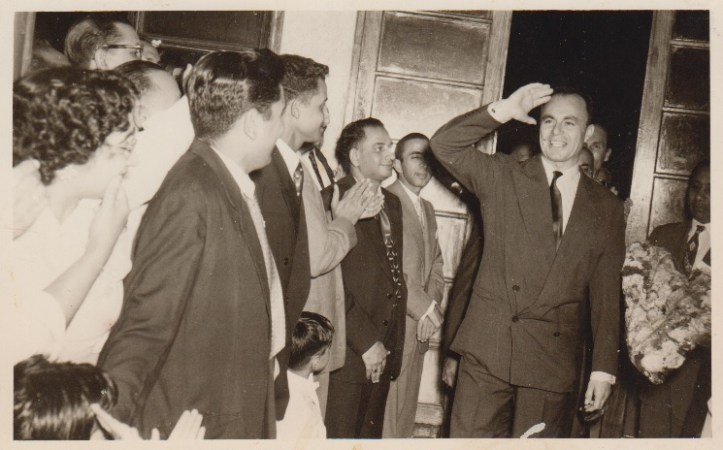
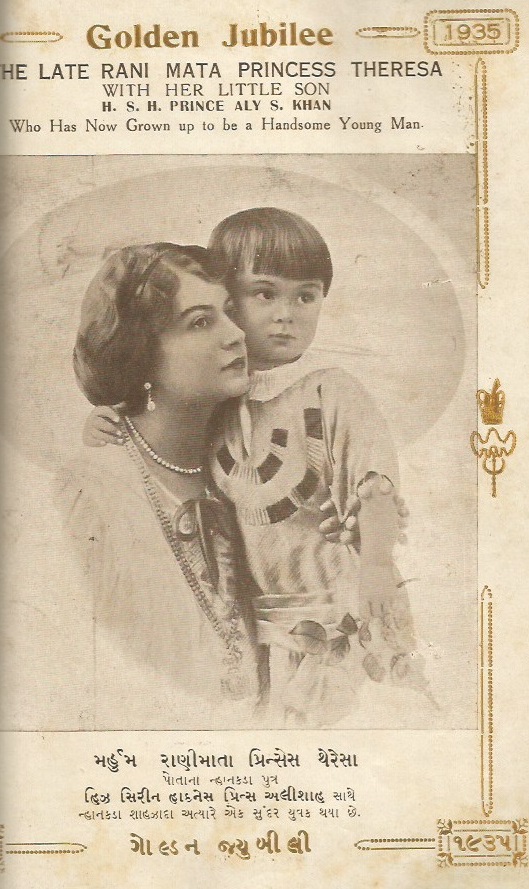
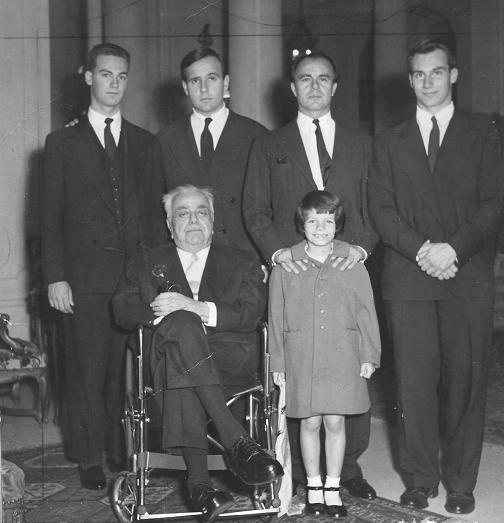
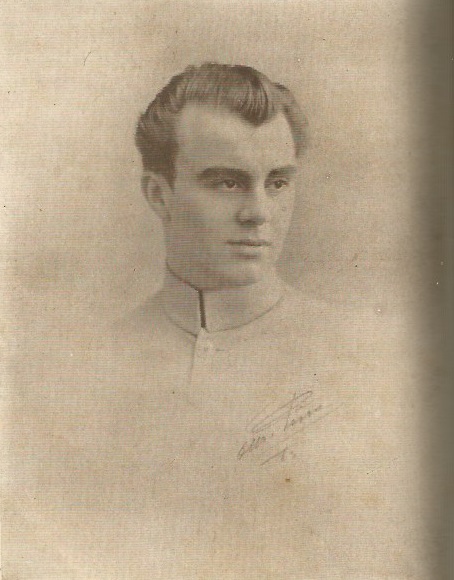
Prince Aly Solomone Khan, father of the 49th Hereditary Ismaili Imam, His Late Highness Prince Karim Aga Khan IV, Prince Amyn and Princess Yasmin, and brother of Prince Sadruddin Aga Khan, was born in 1911 in Turin, Italy, to Cleope Teresa Magliano and Mawlana Sultan Mahomed Shah, His Late Highness Aga Khan III.
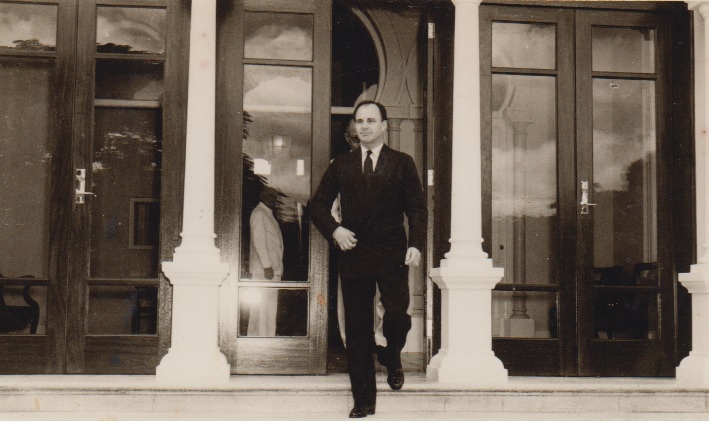
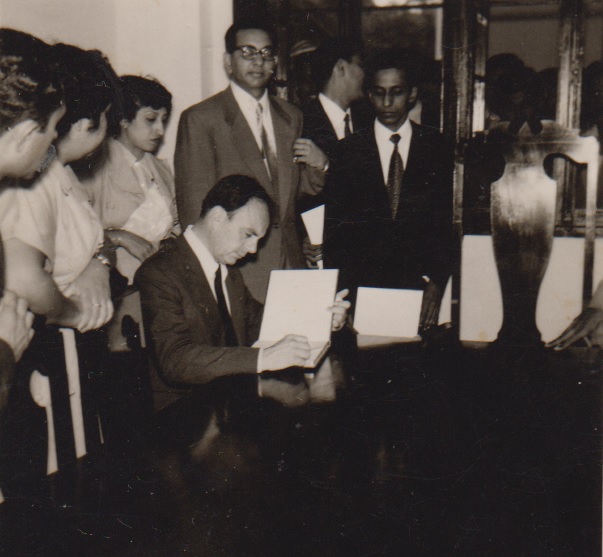
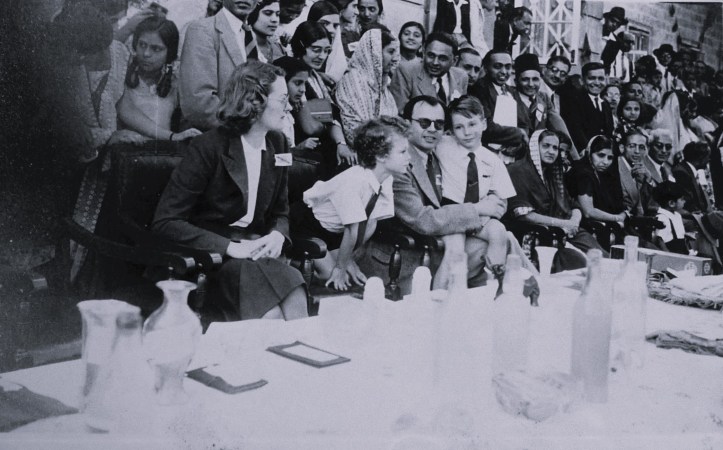
Educated by private tutors in France and undivided India during his childhood, Prince Aly Khan later trained as a lawyer in England; he was a multi-linguist, speaking perfect Oxford English and fluent in French and Arabic. His extensive travels with Mawlana Sultan Mahomed Shah to meet Ismailis in South Asia, the Middle East, and East Africa, and his active participation in the launch of many programs, all aimed at improving the Ismailis’ quality of life, are a testament to his dedication to the Imam-of-the-Time and the Ismaili community.
~~~~~~~~

~~~~~~~~
~~~~~~~~
Prince Aly Khan was an avid sportsman and loved adventure. He was passionate about racing horses, motor cars, and planes and interested in yachting and skiing. As an amateur jockey, he won several prestigious races at the Bar Steeplechase, Prix des Lions, French Amateur Derby, Le Trambley, Chantilly and Longchamp. He won Grand Prix races in France, Monaco and Italy. A man of exceptional stamina, in 1932, flew from Bombay to Singapore via Karachi, Rangoon, and Kuala Lumpur, the longest civil flight ever.
Story continues below
~~~~~~~~
~~~~~~~~

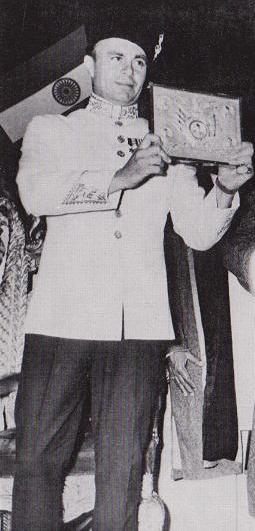
During the Second World War, he served with the British, French and American forces in Europe and the Middle East. His commitment to the war effort was genuinely global. His exceptional military services were recognized with two honours by the French Government — the Croix de Guerre (1939) and the Legion of Honour (1950). The United States Government also acknowledged his bravery, heroic achievement and meritorious service in combat zones by awarding him the Bronze Star Medal. In 1956, he was invested as the 1st Colonel of the 4th Cavalry Regiment.
Story continues below

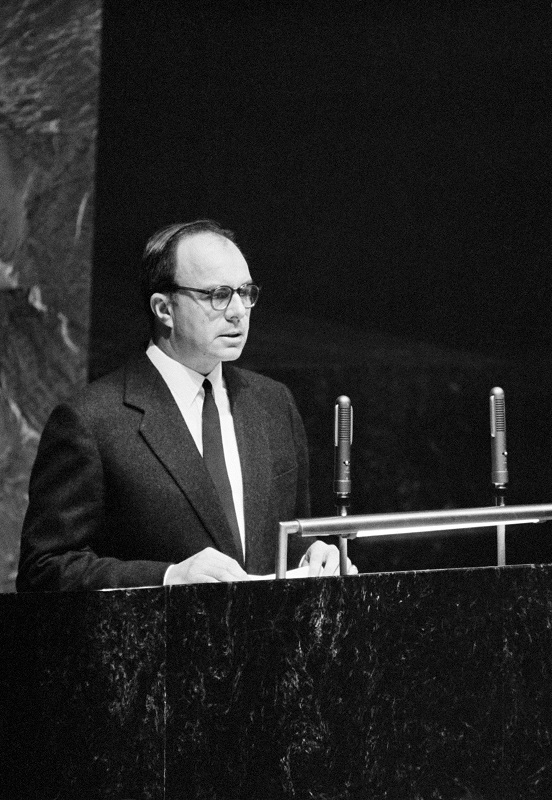
Prince Aly Khan, known for his cosmopolitan outlook and gift for international diplomacy, assumed significant roles following World War II. He served as a member of the United Nations Political and Security Committee, representing Pakistan as its permanent ambassador to the United Nations (1958). His appointment as Vice-President of the UN General Assembly (1958) and Chairman of the UN’s Peace Observation Committee further solidified his influence in the global arena.
Prince Aly Khan passed away in a tragic car accident in Suresnes, near Paris, France, on May 12th, 1960. He was first buried on the grounds of Château de l’Horizon, his home in the south of France, and 12 years later, he was reinterred in Salamiyah, Syria, the place and people he loved dearly.
_____________________
Prince Aly Khan on Unity, Self-Effacement and welfare of the Ismailis
(Published in The Ismaili, India, February 2, 1941)
“Unity and self-effacement are the greatest contributions we can make individually to the rest of the community. By self-effacement, I mean the forgetting of oneself sometimes and making one’s personal interests subservient to those of the largest number. If self-effacement is achieved, the foundation of unity will have been well and truly laid. For, at present, it is the consciousness of one’s self-importance and dignity which is making people forget their duties and responsibilities, and indulge in petty squabbles and bitter trivialities.
Story continues below

~~~~~~~~
“The welfare of the Ismailis is so near and dear to my heart that I cannot light-heartedly bring myself to overlook the weak points of the community. It is by recognizing our own faults that we can hope to improve. Let us realize that in the matter of helping our brethren we have much to learn from our sister communities, and that if we ever hope to achieve what we have set out to, we must resolutely follow the principles of the faith, be guided by the lives of men like Hasan bin Sabah and Pir Sadar Din and concentrate on the two most important principles of life — namely, Unity and Service of the Imam-e-Zaman and Community.”
~~~~~~~~~~~~
Prince Aly Khan on the fundamental beliefs of the Islamic peoples
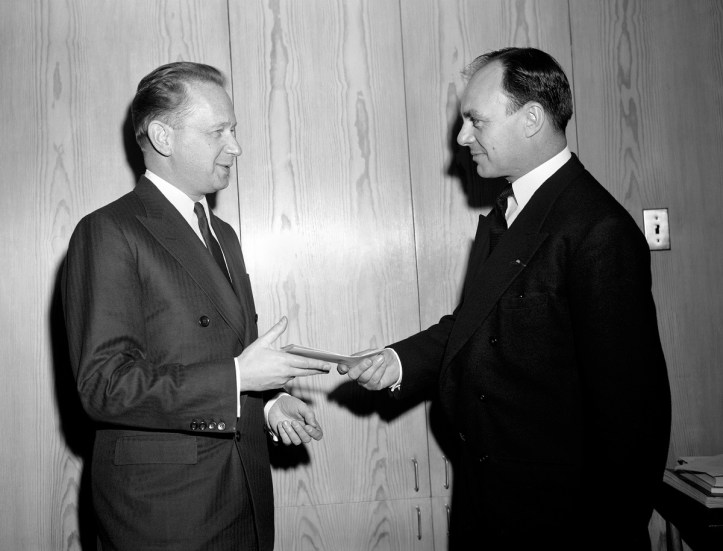
(Excerpts from a speech made by Prince Aly Khan at the Council of Islamic Affairs, New York, on May 27th 1958, during his tenure as Pakistan’s Permanent Representative at the United Nations. The excerpts appeared in Ismaili Crescent dated June 14, 1970. The magazine was published weekly on Fridays in Dar es Salaam by the Ismailia Association for Tanzania.)
Mr. Chairman, Your Excellencies, Ladies and Gentlemen,
….The Council of Islamic Affairs is doing a great service to the world by promoting a greater understanding in America of the rich heritage of the Islamic peoples and their hopes and aspirations for the future.
For centuries, the Moslem and Christian peoples have lived and moved in different worlds. Today the two worlds have become one. This fact alone, if no other, should compel them to get together to meet the challenge of a godless, totalitarian creed, which has proclaimed as its ultimate purpose the destruction of both.
Story continues below

Despite the ebb and flow of its fortunes, the vicissitudes and calamities of its history, Islam claims nearly four hundred million [1.9 billion, 2022 — Ed.] adherents from the Atlantic to the Far East. As a living force in the lives of one fifth of mankind, it is a political fact of great significance in the world of today.
Given a right understanding of the foundations of Islam and Christianity, and the spiritual values which they have proclaimed, it should not prove very difficult to build a bridge of mutual respect and co-operation between the two great religions. Unfortunately, it is a fact that the close similarity between the two remains largely unknown to the West.
Both Moslems and Christians believe in the Unity of God, in the revelations of his Divine Message through his chosen messengers — namely the great prophets, and in the spiritual and ethical foundations of a social order based on the principles of equality, liberty and universal brotherhood.
To bring out the closeness of our basic beliefs, let me quote to you from the Holy Qur’an which sets forth the basic doctrines of Islam:
First, the bedrock of faith — Divine Unity: “And your God is one God; there is no God but He,…there is none like unto Him.”
Second, the whole of humanity is one: their division into tribes and nations is but to facilitate human relations: “All peoples are a single Nation.”
Third, equality: “The White man is not above the Black, nor the Black above the Yellow, all men are equal before their Maker.”
Fourth, dignity of the human person based so often on pride of birth, is rejected.
Fifth, freedom of belief and conscience must be respected.
The Qur’an says: “There is no compulsion in religion. Wherefore, let him who will believe, and let him who will, disbelieve.”
Story continues below

These are the fundamental beliefs of the Islamic peoples. There is no need for me to emphasise the identical precepts to which the Christian world owes allegiance. Indeed, to a religion founded on love — love of God and love of one’s neighbour — such as Christianity, the excerpts that I have quoted from the Qur’an must sound as recitations from the Bible.
It is one of the paradoxes of history that the West and the Islamic world which have so many beliefs and values in common, should have lived in antagonism for centuries. When we consider the great contribution of the Islamic peoples to modern Western civilization, particularly in the realm of scientific enquiry, philosophic thought, and mysticism, wherein the religious spirit is lifted to the sublime, the paradox of conflict becomes all the more striking.
…..I have taken much of your time. One thought more and I will conclude. On the plane of ideals and morals, we find in Islam and the Qur’an, a perennial source of inspiration and guidance. One of the basic teachings of this faith is Divine Unity and the oneness of humanity. The Qur’an says:
“And your God is one God.”
“This your community is one community.”
“All people are a single nation.”
Story concludes below
If we, the people of the Islamic Republic of Pakistan are to remain loyal and obedient to the commandments of our faith, we have no choice but to cast away all thoughts of East and West, of Asian, American or European and of all those barriers which alienate man from man, and people from people, so that we may join together to promote universal brotherhood under God. I thank you.
Date posted: May 12, 2025.
_______________________
FEEDBACK AND Table of Contents
Before you leave, remember that Barakah’s editor, Malik, is here to assist you. If you have any questions or feedback, please scroll down to leave a comment or send an email to mmerchant@barakah.com. Also, don’t miss the opportunity to explore the diverse and extensive content on Barakah’s Home Page or Table of Contents, with over 350 pieces dedicated to Mawlana Hazar Imam, members of his family and the Ismaili Imamat. And don’t forget to visit our sister websites, Simerg and Simergphotos. You can stay updated by following Malik on @Facebook, @X and @LinkedIn.
 Barakah
Dear Malik,
Thank you for this wonderful article. Prince Aly Khan was truly a remarkable man. He was able to mingle and communicate with all different age groups. A man who certainly inspired me. My Hero!!
LikeLiked by 1 person