ABSTRACT: Aga Khan V’s maiden visit to Canada, from March 24 to 31, 2026, cast renewed light on an older Ismaili tradition of mediation, institution-building, and moral presence. At a moment when mediation and restraint are under strain, this essay turns to “engaged neutrality” to bring the contemporary force of that tradition into focus.
Neutrality no longer names distance. It names a burden few are willing to carry.
When every power demands allegiance, neutrality becomes one of the last serious forms of political responsibility. Alliance logic hardens. Crises arrive already sorted into camps. Every judgment is measured by the speed of declaration.
Recent scholarship gives this claim firmer ground. A 2024 study in PLOS ONE shows that neutral ties were recurrent and structurally important in international networks rather than incidental absences. Fabio Figiaconi’s 2025 essay extends the point by arguing that hedging belongs within the broader family of neutrality. The implication is plain. Neutrality does not stand outside order. It helps sustain it.
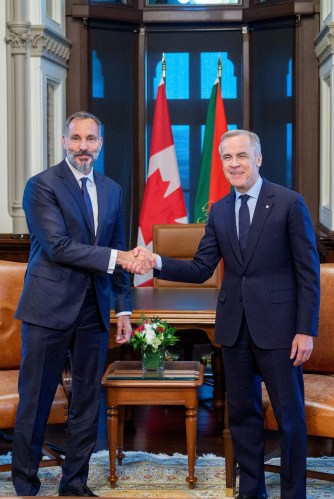
That is one way to understand the significance of Aga Khan V’s visit to Canada. The joint declaration issued with Prime Minister Mark Carney on March 25 gave that significance institutional form, presenting the relationship between Canada and the Ismaili Imamat as a longstanding partnership grounded in shared values and practical collaboration. For Ismailis, it is a moment of continuity, devotion, and communal feeling. It also carries a wider resonance. Canada still speaks in the idiom of pluralism, mediation, and middle-power diplomacy, though that vocabulary now sounds strained in a harsher age. In such a climate, Aga Khan V’s arrival quietly reopens a larger question: can there still be a serious place between taking sides and walking away?
Religion and the blind spot in International Relations
That question belongs to International Relations as much as it does to contemporary Ismaili history.
In an earlier essay, “The Imperative of Religion in the Study of International Relations”, I argued that the discipline has long preferred a secular self-image it does not fully inhabit. Religion was pushed to the margins as inheritance, sentiment, or disturbance, while the central business of world politics was assigned to states, interests, markets, and force. Yet religion continued to shape legitimacy, law, development, diplomacy, and moral imagination across borders. It never left the stage. The discipline simply trained itself to look past it.
The Aga Khan unsettles that older map almost by definition. He does not fit the familiar idiom of sovereignty. The office he inhabits has nevertheless acted in the world through diplomacy, civil society, development, education, and culture. Prince Rahim Aga Khan V became the 50th hereditary Imam of the Shia Ismaili Muslims on February 4, 2025. The Imamat he now leads is bound to a transnational institutional ecology whose reach extends across more than thirty countries. In Canada, that presence includes the Delegation of the Ismaili Imamat in Ottawa and the Global Centre for Pluralism, created by the Aga Khan and the Government of Canada.
A different current within Muslim worldliness
To understand the distinctiveness of that presence, it helps to place the Aga Khan tradition alongside another large twentieth-century story: the making of Islam as a global historical actor. Here Cemil Aydın becomes indispensable. In The Idea of the Muslim World, he argues that “the Muslim world” is not an eternal civilizational unity but a modern idea, produced and naturalized under imperial conditions.
In my essay, “End of Islam?”, engaging with Faisal Devji’s Waning Crescent: The Rise and Fall of Global Islam, I reflected on his argument that Islam once appeared in modern political life as a global subject and now enters a different phase, more fractured, more ethically charged, less available as a singular actor. Devji’s framing is useful here because it clarifies what the Aga Khan tradition has been doing all along. Its energy has flowed into durable institutions of care, knowledge, and relation. It has never sought to personify a Muslim bloc.
This is where engaged neutrality becomes useful. I use it to describe a practice of staying in relation under pressure: mediation without capture, responsibility without enlistment, presence without surrender to the bloc.
The burden of engaged neutrality becomes clearer once neutrality is placed alongside the other postwar languages with which it is too easily confused. Classical neutrality emerges from a European legal-diplomatic tradition concerned above all with the conduct of states in war: how to remain outside conflict, what duties attach to non-participation, how impartiality is maintained. Its idiom is restraint. Its horizon is interstate war. Its ambition is procedural. Bandung, by contrast, was not principally a doctrine of staying out. The 1955 conference gathered twenty-nine Asian and African governments, most of them marked directly by colonial experience, to discuss peace, decolonization, development, and the role of what would later be called the Third World in the Cold War. Its language was less juridical abstention than anti-colonial dignity, sovereign equality, and the insistence that the formerly colonized world would no longer enter international society as an object of management but as a speaking subject of history.
A wider historical map sharpens the point. Neutrality, Bandung, non-alignment, and Tricontinental solidarity belong to the same broad postwar century, though each arose from a different wound and imagined political distance in a different way. Classical neutrality emerged from a legal and diplomatic tradition shaped by war and non-participation. Bandung spoke in the voice of anti-colonial dignity and sovereign equality. Non-alignment sought room for manoeuvre inside a bipolar order. Tricontinentalism carried the charge of insurgent solidarity across Asia, Africa, and Latin America. The Aga Khan tradition moves through that landscape without coinciding with any of its canonical forms. It names another possibility: religiously grounded, institution-building, globally entangled, and morally exposed to an age that mistrusts every intermediary position.
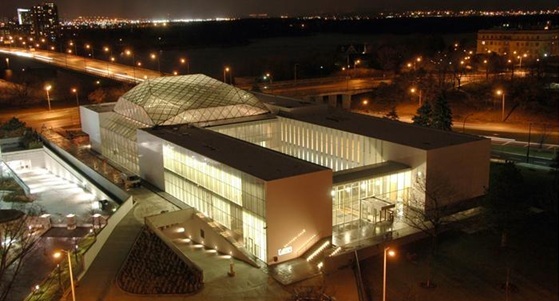
What emerges is a distinct political form. Engaged neutrality is neutrality without indifference: moral purpose thickened into institutions. Care is organized through schools, hospitals, universities, cultural agencies, refugee protection, and civic forums rather than through sovereign command. It is also present without capture: remaining in the room without being owned by it. The Delegation of the Ismaili Imamat in Ottawa says this with unusual candour when it describes itself as a centre for building relationships and enabling quiet diplomacy. The phrase matters because it names a practice of public usefulness that does not depend on partisan absorption.
There is also a universal claim here, though it is easy to miss. The Aga Khan model reaches beyond its own community, but it does so through a religious tradition rather than through the usual claim of neutral universality. Its language of service, regardless of faith, origin, race, or gender, is neither sectarian nor abstractly secular. Tradition becomes a vehicle of public responsibility across differences. For the discipline of International Relations that still tends to see religion mainly as identity, rhetoric, or threat, this remains difficult to grasp. The Aga Khan case points to another possibility: religion can also take institutional form and serve as a vehicle of public responsibility.
However, the risks are real. The same practices that preserve access can also make unequal power seem less visible. Quiet diplomacy can slip into silence. Development language can turn injury into administrative prose. Pluralism, too, can be invoked too broadly when the real issue is not misunderstanding but domination, force, and abandonment. Any serious account of this tradition has to hold both sides in view. Otherwise, one risks praising civility while power escapes scrutiny.
Engaged neutrality deserves attention only when understood as a burdened position rather than a self-congratulatory one.
The Making of a Public Tradition
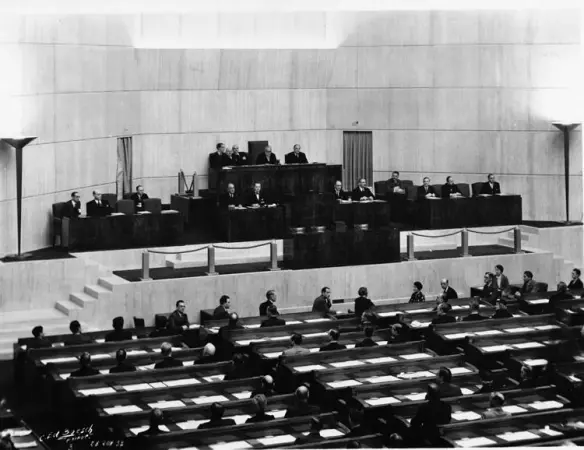
There is a longer history behind this than is often remembered. Sir Sultan Mahomed Shah, Aga Khan III, stood at an earlier hinge of world politics. In 1937, he became President of the League of Nations Assembly. That detail matters because it reveals that the Aga Khan relation to international life did not begin as a late twentieth-century development. It already carried a diplomatic and civilisational ambition. Aga Khan III moved within the grammar of empire while anticipating another mode of public authority, one grounded in legitimacy, convening power, and the labour of mediation.
Aga Khan IV recast that inheritance for the age of decolonization and gave it institutional scale. When he became Imam in 1957, the world was being remade by decolonisation, Cold War rivalry, development discourse, and the search for viable public forms beyond empire. His response took institutional shape. He invested in schools, universities, hospitals, museums, architecture, and civic platforms. Over time, those efforts formed a recognisable architecture of Muslim presence in the world. The Aga Khan Award for Architecture dates from 1977. The Aga Khan University was founded in 1983. The University of Central Asia was created in 2000 through an international treaty. The Aga Khan Museum opened in Toronto in 2014. These are not decorative achievements. They show how ethical commitments acquire durability when they are carried by institutions rather than sentiment alone.
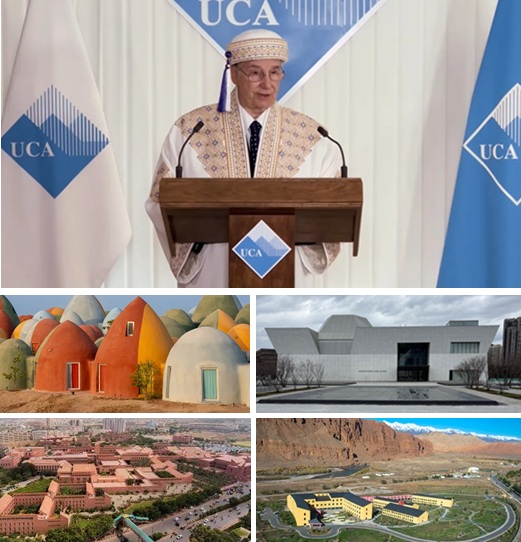
This tradition asks for stronger language than philanthropy. The word sounds too light, too discretionary, too close to benevolence at the edge of power. What took shape under Aga Khan IV was a sustained effort to build public capacity. Education carried an idea of social possibility. Architecture carried a civilisational argument about beauty, continuity, and inhabited dignity. Development carried a wager on social well-being as a precondition for plural life. Culture carried memory into forms that could be shared, inhabited, and renewed.
Canada as a site of relation
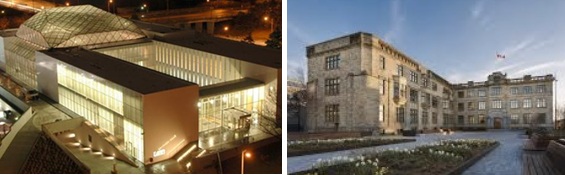
Clearly, Canada has become one of the places where this vision has taken material form. The Delegation of the Ismaili Imamat in Ottawa is more than an administrative address. It is a diplomatic and architectural statement about relations. The Global Centre for Pluralism, founded by Aga Khan IV and the Government of Canada, gives that statement a public vocabulary and an institutional programme. Together, they suggest a way of inhabiting civic life that takes pluralism seriously as structure, discipline, and achievement. Canada’s place in this story is therefore more than symbolic. It has served as a setting in which the Aga Khan imagination of public responsibility has found visible expression.
That visibility also sharpens the tension within the tradition, and it is here that Prince Sadruddin Aga Khan becomes indispensable.
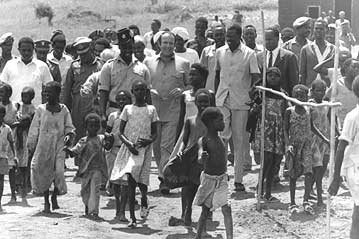
As United Nations High Commissioner for Refugees from 1966 to 1977, he confronted the century from the side of exile, displacement, and human vulnerability. Under his tenure, UNHCR expanded beyond its earlier European focus as the geography of refugee crises shifted across Asia and Africa. More important than the administrative record, though, was the ethical orientation his work made visible. He kept the refugee in view as a person. Modern politics has many ways of turning human beings into aggregates, flows, burdens, and files. Sadruddin’s legacy belongs to a contrary effort. He worked to preserve the terms under which the vulnerable could still appear as persons entitled to protection and regard. “When we think of the refugee, we must really think of the individual,” he said, insisting on singular human life inside mass displacement. He defended non-refoulement as a basic principle of refugee protection and pressed toward an understanding of displacement that linked catastrophe to earlier violations and warning signs. This was not neutrality as indifference. It was mediation under ethical pressure: preserving channels, coordinating governments, and defending protection without letting the individual disappear into the abstractions of geopolitics.
That humanitarian dimension gives engaged neutrality its sharpest test. It matters only when it remains answerable to suffering, power, and truth. Otherwise, mediation slips into posture.
Taken together, Aga Khan III, Aga Khan IV, and Prince Sadruddin form a wider genealogy than the word “neutrality” usually allows: mediation under empire, institution-building after decolonization, and humanitarian presence in the face of displacement. The Aga Khan relation to world affairs was never only diplomatic and developmental. It was humanitarian in the strictest sense as well.
The Burden of Intermediacy
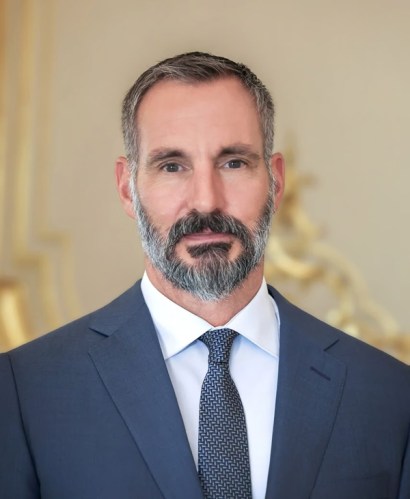
Aga Khan V inherits this tradition in a harder time: wars without settlement, institutions without confidence, and a public sphere impatient with intermediary forms. Public life rewards declaration. The world has grown more brittle, more polarised, and less patient with complexity. In such an atmosphere, anyone who preserves relation across division is eventually asked which side he is really on.
That is why this visit to Canada matters beyond ceremony. The visit throws three questions into relief: whether a religious office can sustain a civic presence of consequence without adopting the grammar of sovereignty; whether Muslim public life can remain globally engaged without hardening into bloc thinking; and whether institutions built over generations can still hold trust in a world suspicious of every intermediary claim.
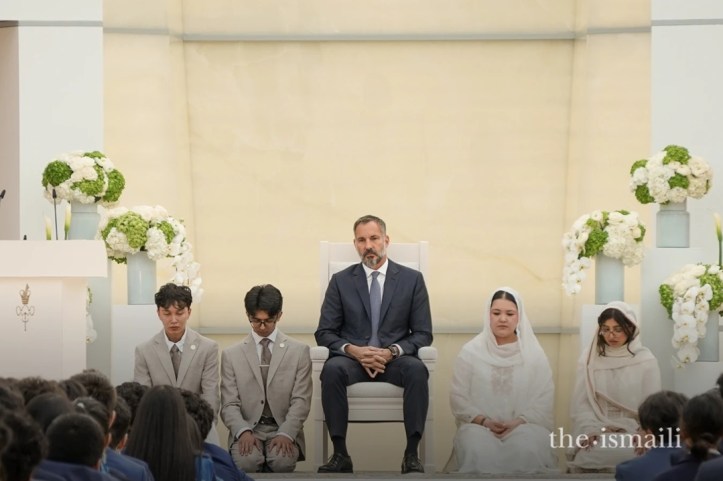
For Ismailis, these questions are lived through devotion, continuity, and allegiance to the Imam. More broadly, they ask whether authority can move through the world in a civic key, whether faith can inhabit public life without domination, and whether institutions can carry ethical commitments across time. Those achievements remain incomplete, contested, and exposed to history. Their value lies there as well. They were forged under pressure, not above it.
Neutrality here does not mean indifference. It means remaining present without being captured. The real question is not whether neutrality remains admirable, but whether our political imagination has grown so thin that every intermediary form now appears compromised in advance. The Aga Khan offers no answer free of risk. He offers a way of seeing the problem clearly. Aga Khan III gave it an early grammar of mediation under empire. Aga Khan IV gave it institutional depth. Prince Sadruddin made it visible through the refugee question. Aga Khan V inherits that demanding legacy at a moment when the space of mediation itself is under strain.
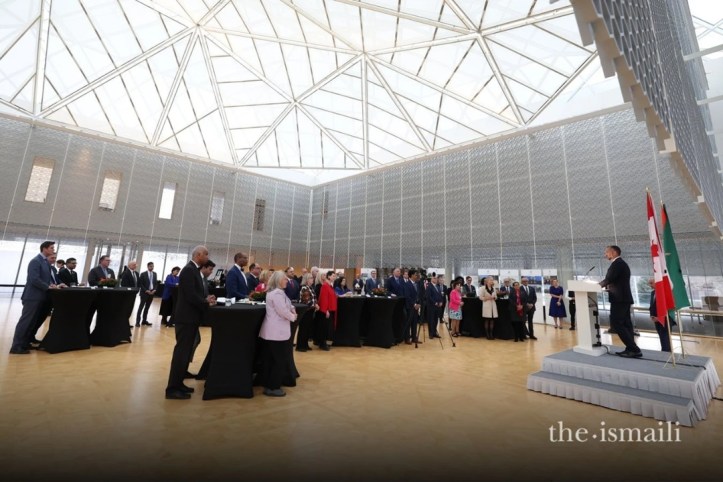
In that sense, Aga Khan V’s visit does more than mark succession. It brings into view a larger political and moral inheritance. His task is to keep the Aga Khan form usable across fractured worlds without letting pragmatism harden into moral opacity. International relations has little language for such a figure. The Aga Khan is neither sovereign, nor market actor, nor NGO. He works through inherited legitimacy, institutional durability, developmental presence, and the capacity to move across political worlds. What comes into view is a form of Muslim worldliness after ideology, sustained through institutions.
In an age against neutrality, that may be one of the last serious names we have for the burden of the intermediacy.
Date posted: April 6, 2026.
______________
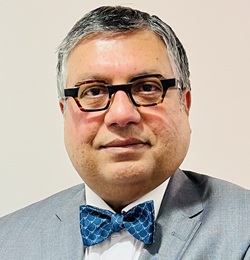
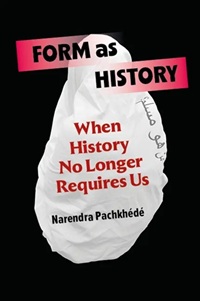
About the author: Narendra Pachkhédé is a scholar, journalist, essayist, and cultural commentator whose work spans global affairs, cultural diplomacy, political philosophy, and public life. Published widely across North America, Europe, and Asia, and included in multiple anthologies, he divides his time between London, Toronto, and Geneva. His latest book is Form as History: When History Does Not Require Us (Daraja Press, 2026).
~~~~~~~~
Form as History: When History Does Not Require Us
by Narendra Pachkhédé
A deeply thought and beautifully written meditation on the changing role of history in contemporary political debate — Faisal Devji, Beit Professor of Global and Imperial History, University of Oxford.
_______________
Please click SUBSCRIBE and enter your email address to receive update notifications from Barakah. Before you leave, remember that Barakah’s editor, Malik, is here to assist you. If you have any questions or feedback, please scroll down to leave a comment or send an email to mmerchant@barakah.com. Also, don’t miss the opportunity to explore the diverse and extensive content on Barakah’s Home Page or Table of Contents, with over 350 pieces dedicated to Mawlana Hazar Imam, members of his family and the Ismaili Imamat. And don’t forget to visit our sister websites, Simerg and Simergphotos. You can stay updated by following Malik on @Facebook, @X, @LinkedIn and @Instagram and by subscribing to Barakah.
 Barakah